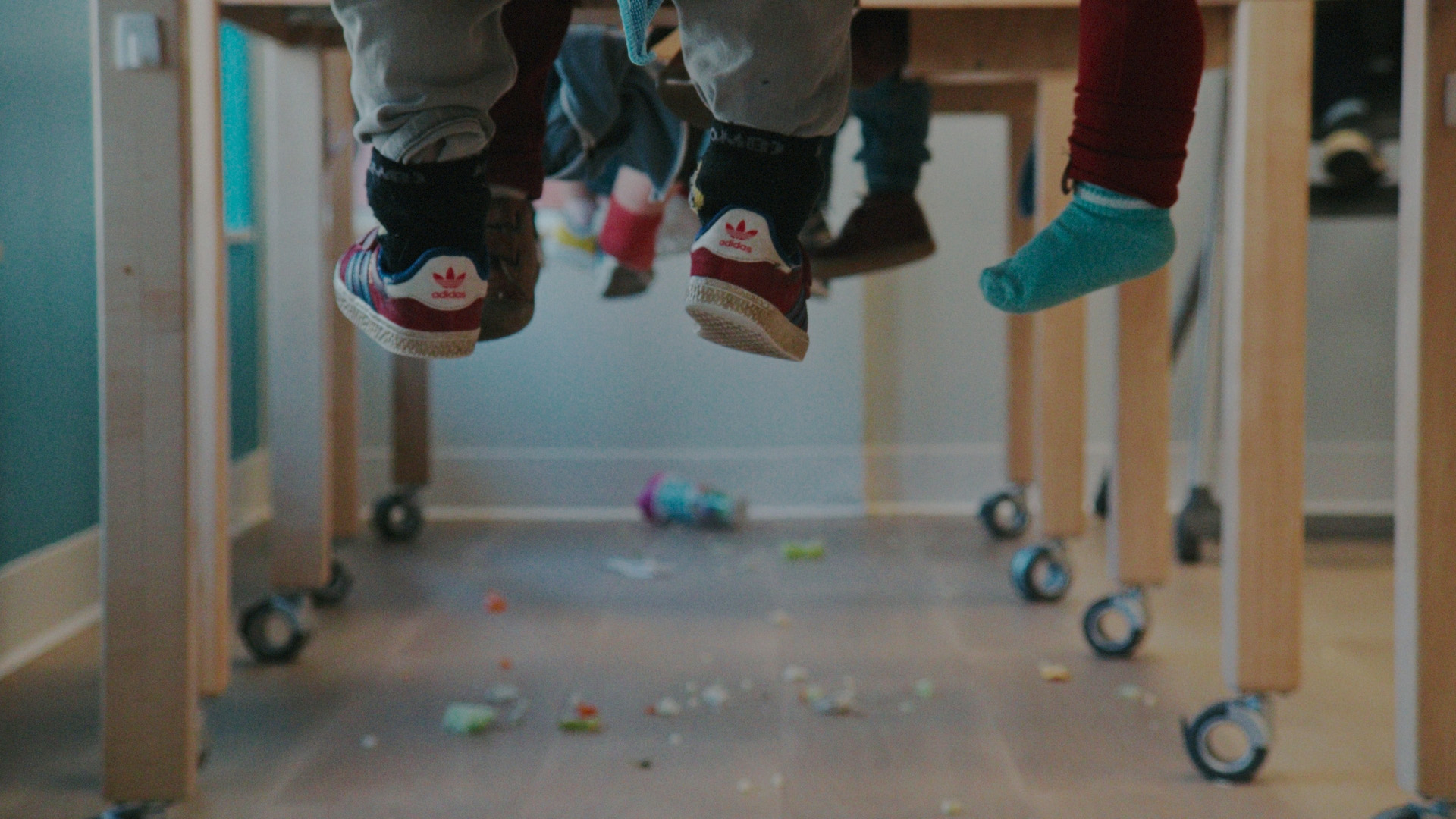
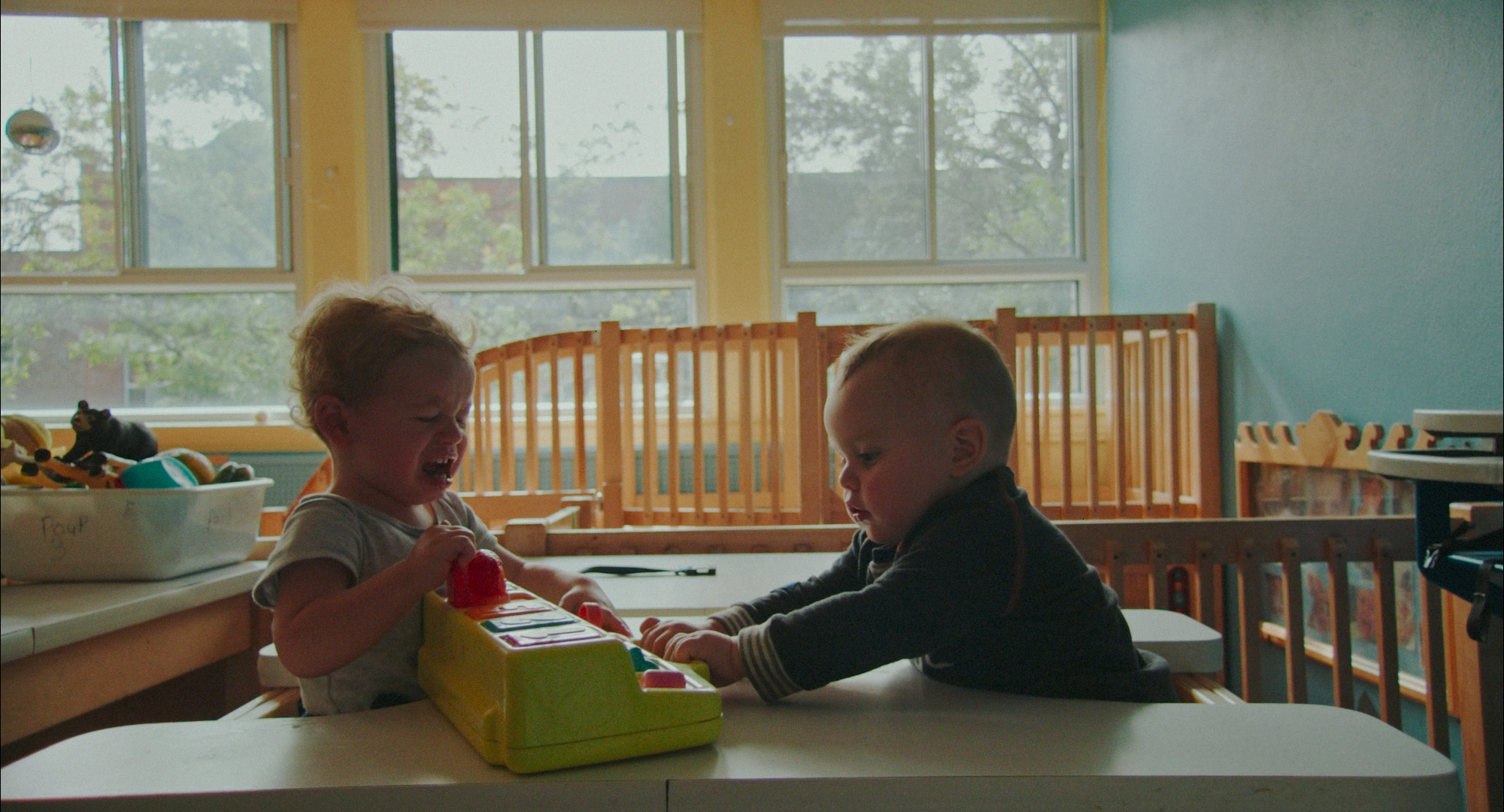
The simultaneously benevolent and tumultuous space of a daycare serves as the anchor for this free exploration of early childhood.
Built by progressively following the evolution of ages on screen, the film draws us into the bubble of various children aged 1 to 5, at that stage where consciousness quietly shifts from “I” to “We.” Through these rarely filmed moments, human nature gradually takes root.
With Kindergarten, Jean-François Caissy delivers an observational film on early childhood that prompts reflection on what the future holds in store for us.
Not a movie about daycares
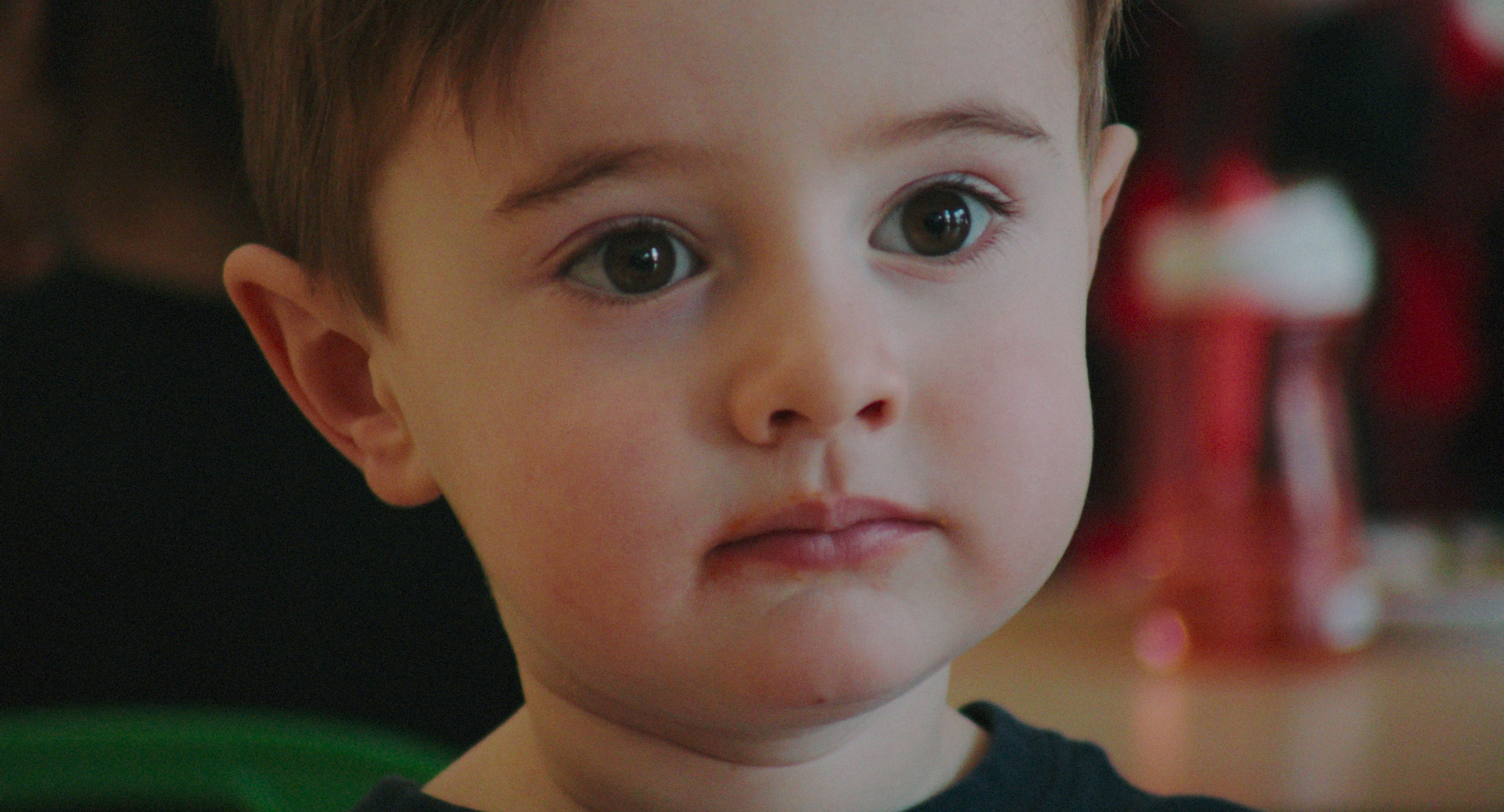
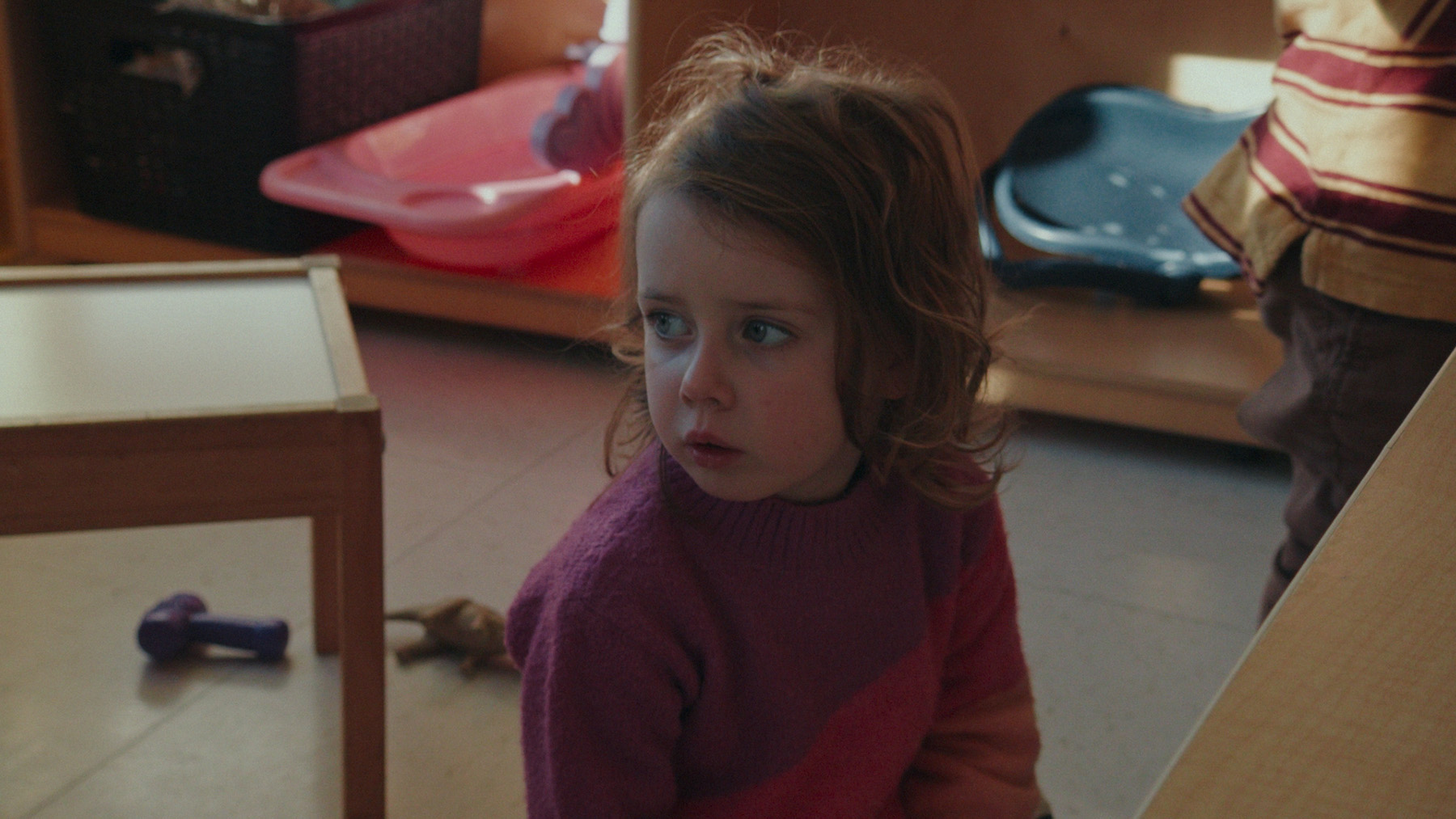
Kindergarten is not a film about daycares, but rather about children. The documentary relies on a stimulating premise: following a single protagonist at a time to immerse ourselves in their intimate universe. By successively making each child the center of our attention, Kindergarten invites us to introspection, capturing those precious moments where each seeks to tame the world around them.
It is indeed the children who are the subject, as seen through the fact that we never see an adult’s face. Somewhat like in the Peanuts cartoons, adults become a blurred and unimportant presence.
Since the subject is not the daycare system, it does not address everything that doesn’t work. It simply casts a gaze on the toddlers’ actions and interactions. It is up to the spectator to draw a conclusion. One child hits another child, another consoles a weeping toddler, two others squabble over a toy… Is it good? Is it bad? That is not the point either. We observe these altogether typical behaviors for the age of these little creatures.
A film that grows with the children
Among the most interesting elements is the very structure of the film. It rests on the idea of presenting the children in a way that shows them growing chronologically. We thus meet a first group of children around 1 year old, then find ourselves following the adventures of 2-year-old toddlers, and so on. This choice of narrative construction allows the spectator to experience the different stages of toddler development.
But it is another subtler choice that makes this documentary a singular work. To support the idea that the children’s universe gradually expands, the director adapts the very format of the film according to the age of the protagonists on screen. The film thus begins with the babies in an almost square image format (1.33:1) and then progressively opens up to end in a widescreen format (1.85:1) with the older ones. The frame thus widens as the children’s universe gains scale.
A little more…
Kindergarten is not a film for parents. Nor is it a film seeking a scandal. It is a work that seeks to show how young children develop, interact, and discover the world around them.
The film watches just as well in bed on a tablet as on the TV on a Sunday morning. It also brings interesting narrative elements and invites questioning about these little things we bring into the world without always fully grasping all the responsibility that comes with it.