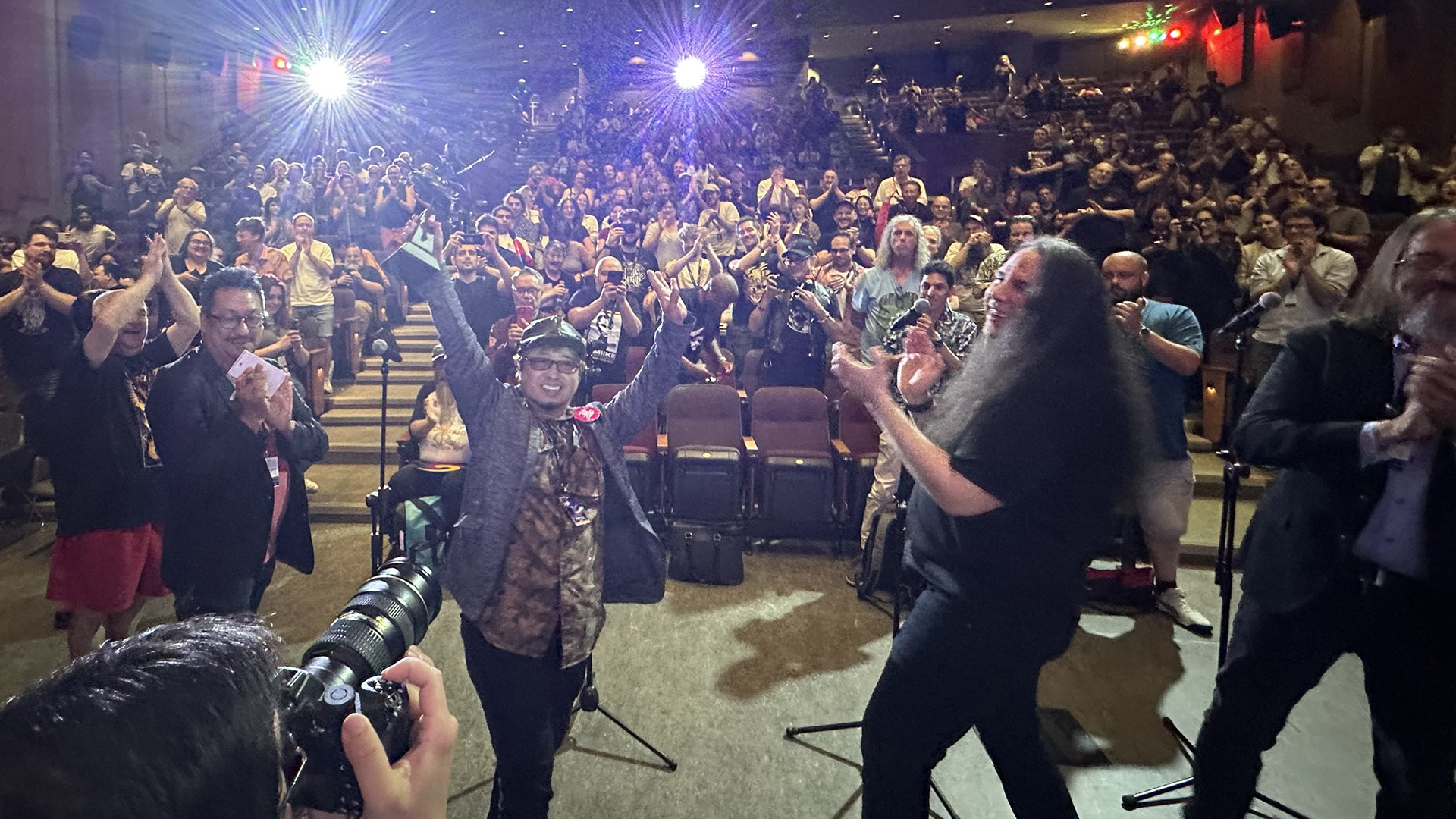
For this 2026 edition, the Fantasia Festival celebrated the work of Japanese director Takashi Shimizu, a prominent figure in J-Horror best known for the Ju-on saga (known as The Grudge in North America).
Not only is the director presenting two films at the festival—the North American premiere of The Mouths and the world premiere of Village of Eight Gravestones—he will also receive the Cheval Noir Lifetime Achievement Award.
We had the privilege and honor of sitting down with the director to discuss his relationship with horror, the creation of Ju-on, and his overall career.
The mouths
I would like to say that it is an honor to meet you, and also, as I said yesterday, today is your birthday. It is a great honor to meet you. And I know that today is your birthday, so happy birthday.
Thank you so much.
So, my first question is that you have mostly made horror films in your career. Do you have a particular relationship with genre? When I look at your career, horror films are the main genre.
How do you feel about genre films? In my case, the reason why I made my debut as a director was because of horror films. I happened to become a fan of horror films. I didn’t want to make only horror films.
But it seems that I was good at it. I am happy and grateful for that. But I really want to make comedies. There are a lot of people who are happy with my horror films. And that’s what I’m good at, and that’s how I started. That’s my strong point. And I am very happy that everyone is happy. But in reality, I would like to make comedies.
What would you like to make in a comedy? What kind of things do you want to make in a comedy?
I think that comedy is very difficult. It depends on the country and the point of laughter. It’s the same in Japan and other countries. It depends on the person’s hobby.
It depends on the point of laughter and taste. So I would like to make things that are similar to that. I would like to make something that makes everyone laugh.
I would like to find the interest of everyone. I think it’s the same for horror films. It depends on people’s tastes.
It’s not the same things that will scare people. It’s not the same things that people will like. So it’s very important for me. There are a lot of similarities.
You said that not all people are afraid of the same things. Is there something that terrifies you and that you want to transcribe in your film?
There are a lot. I don’t have much psychic experience. But I have heard stories from people. I have heard stories from actors and staff.
I want to transcribe those stories in my film. I often use my ideas in my film. There are a lot of things that I am afraid of.
I have never had a spiritual experience. But I have heard stories from my sister and people I work with. I want to transcribe those stories in my film.
You are famous for having created the film Ju-On. I would like to know how you came up with the idea of Ju-On. Did you think it would be so successful internationally? Did you think it would be so successful internationally?
I didn’t think it would be so successful. I wrote the story when I was a college student. It was not a horror story. It was a suspense story.
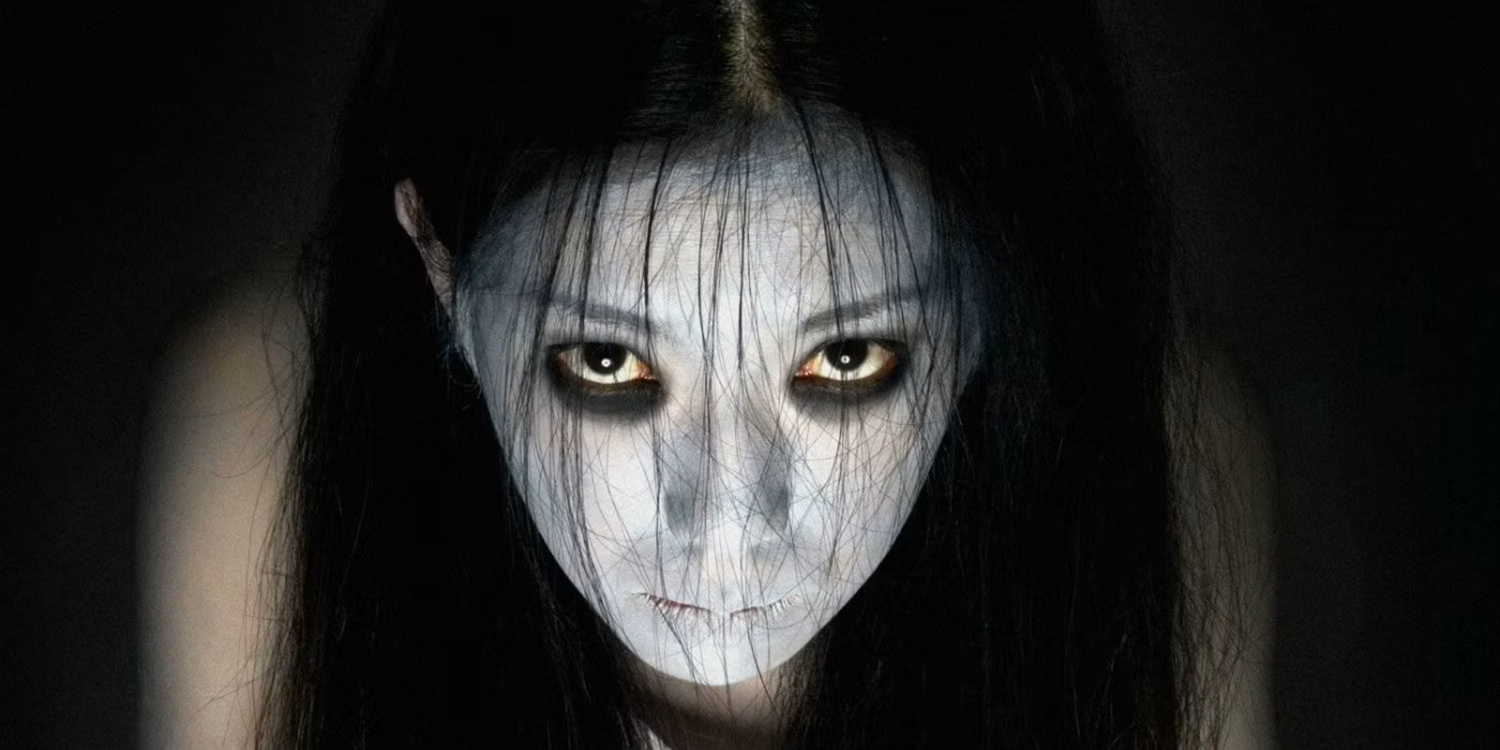
Ju-On / The Grudge
It was a suspense story. It was a story about a seven-year-old boy who couldn’t go to school. And the professor was worried, so he went to visit him at his house. And there, in his house, strange things were happening. And from there, I expanded my idea. And it became a horror story.
So, it was such that even the Americans wanted to do their remake, which you yourself made, which is a first for a Japanese director. But we know that the American system is different from the Japanese one. How was your experience working for Hollywood?
On the first film (The Grudge), I had a lot of arguments with the producer! At one point, I even told him: “Fire me, buy me a plane ticket, and I’ll fly back to Japan!” I didn’t see the point of hiring a Japanese director if my vision wasn’t going to be used.
However, looking back, I learned a lot. The system, the approach, and the cultural and religious aspects of horror films are completely different in the United States. You have to make a lot of compromises to adapt a film for an American audience. In hindsight, it was a very valuable learning experience.
Beyond films, You not only made films, you also worked on TV, you wrote a manga and a video game. Among all the media you worked on, is there one you prefer?
Actually, I didn’t write a manga! There is a Ju-On manga adaptation, but it wasn’t written by me. Out of all the media, whether it’s television, video games, or cinema, my favorite is definitely film.
The game was derived from the movie, but cinema remains my true passion. That said, for the future, I have a dream of writing a book for children.
One last question: You are attending the festival today to receive the Cheval Noir Award (Black Horse of Honor). How do you feel about this festival and receiving this award?
It is my first time attending the festival, and it coincides with my 30th anniversary in the industry. Many of my films have been screened at Fantasia over the years, but I was never able to attend in person due to time constraints. To finally be here this year and receive such an honor is a huge privilege. I am very happy and truly hope to have the opportunity to come back again.