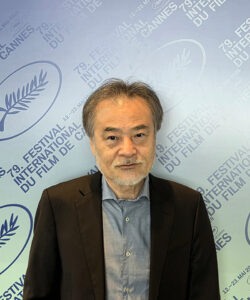
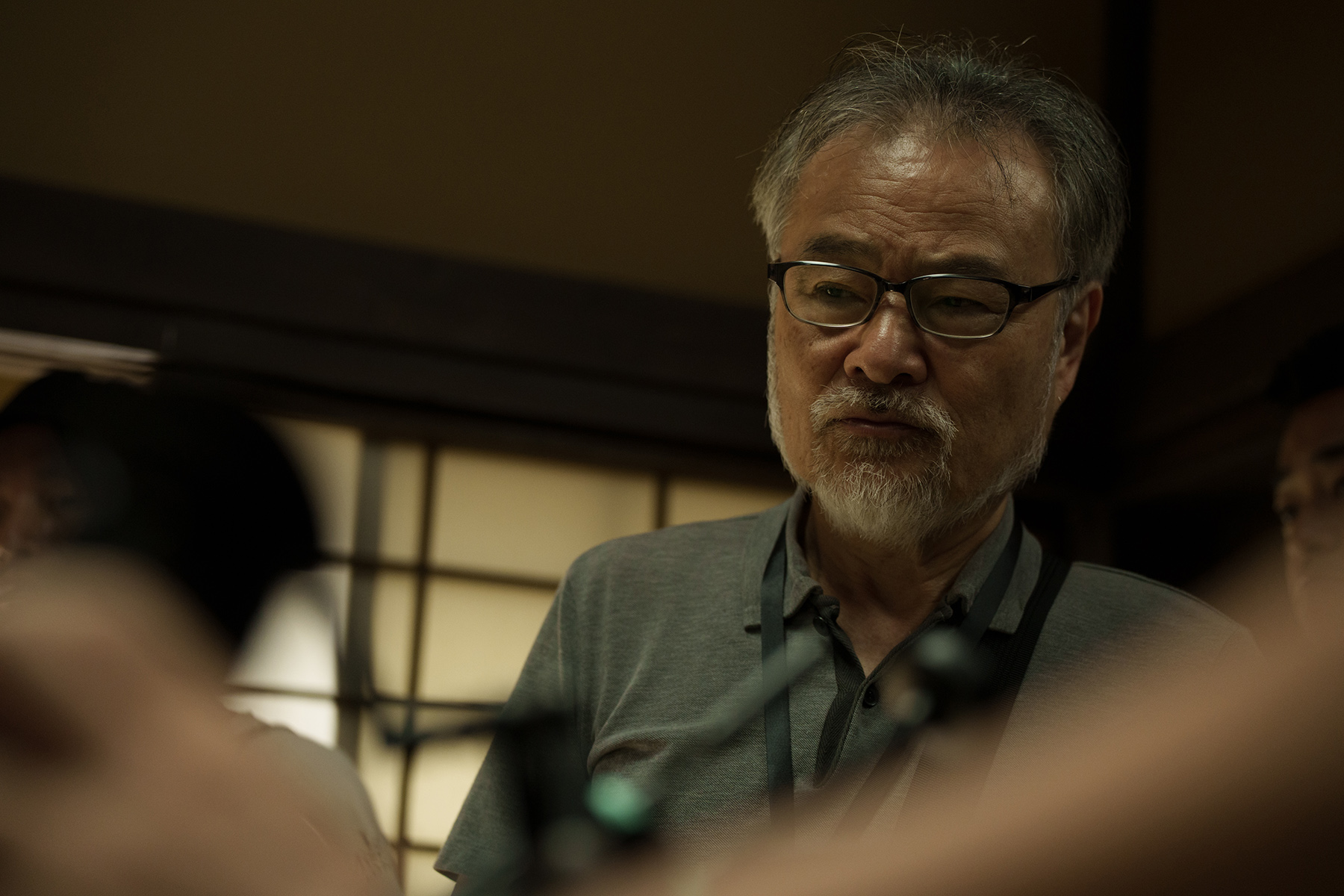
Kiyoshi Kurosawa is one of the most influential Japanese auteur filmmakers since the 1990s. He approaches cinema with a style that is uniquely his own, characterized by a slow pace and often unsettling atmospheres. He is the creative mind behind films such as Cure (1997) and Pulse (Kaïro in Japanese, 2001). Regularly selected for major festivals like Cannes and Venice, he has received numerous prestigious awards.
It comes as no surprise, then, to see him at Cannes this year with his latest film—though with one notable difference: this film contrasts with the rest of his filmography. Once again, he demonstrates his ability to move between genres. After working in fantasy and drama, he now presents a historical film, while maintaining a distinctly personal signature.
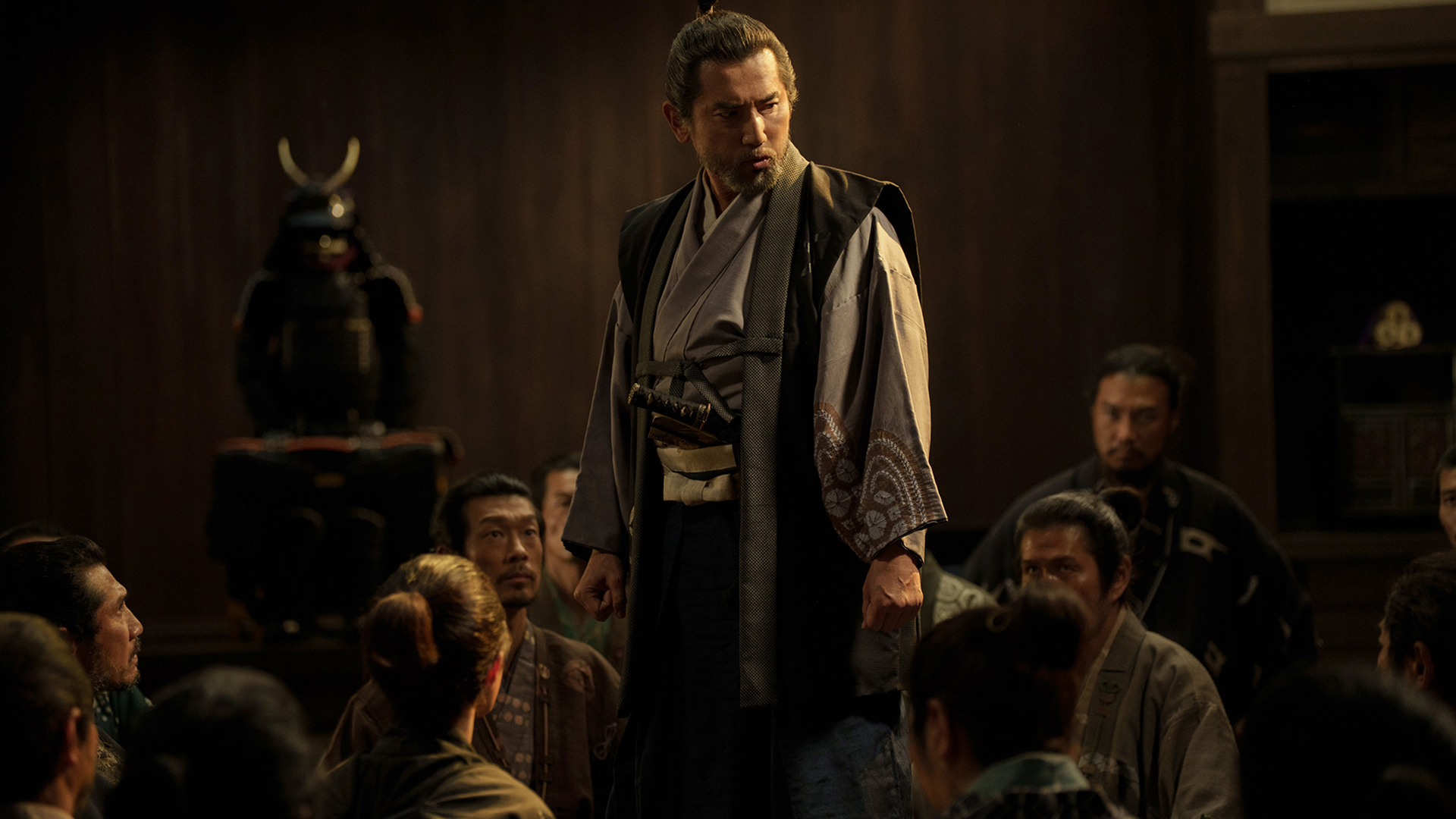
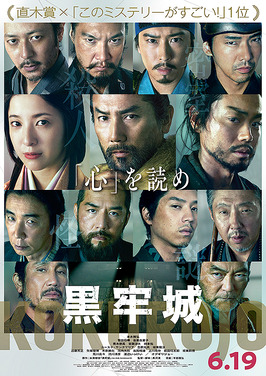
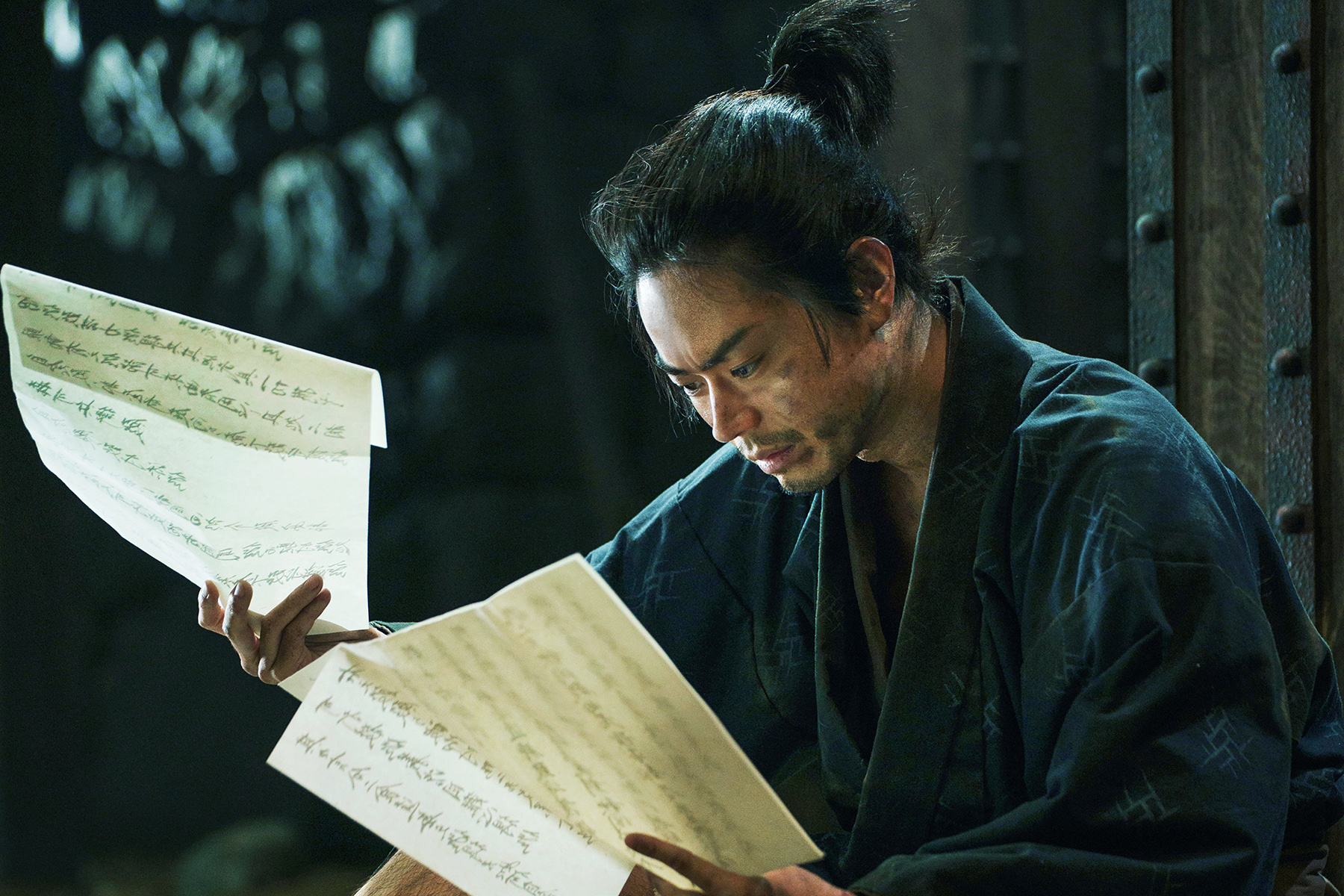
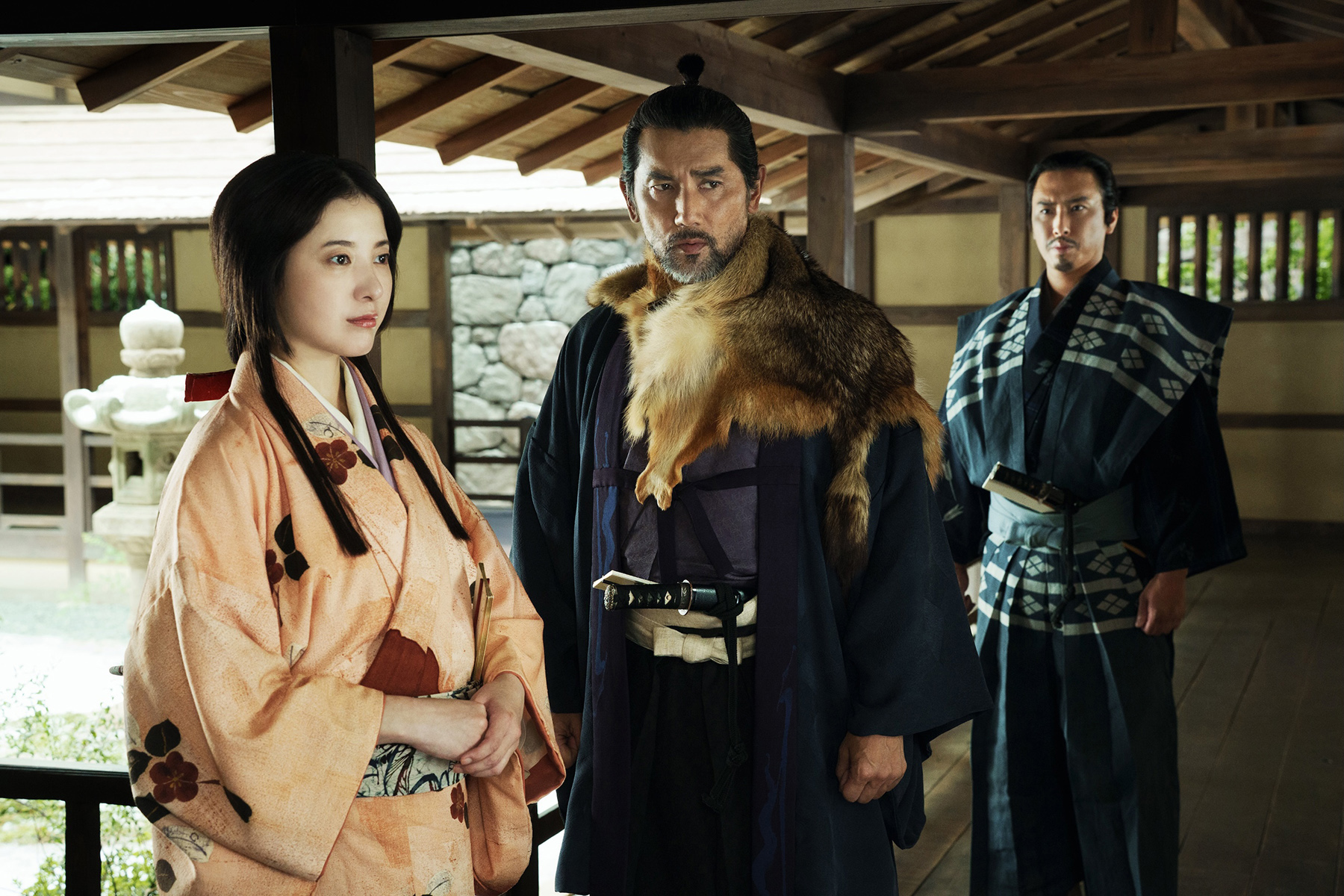
The Castle of Arioka takes us to feudal Japan. Lord Murashige retreats into his castle, where he holds his enemy, the strategist Kanbei, captive—choosing to spare his life. As the seasons pass, unexplained crimes begin to disrupt the order of the place. Murashige investigates, but each time he is faced with a missing piece that only Kanbei, from his cell, seems able to decipher. Between mistrust and control, their relationship evolves, while new murders occur and Murashige gradually loses control of what is unfolding within his own castle…
The film is adapted from the novel The Samurai and the Prisoner by Japanese author Honobu Yonezawa. The director has not hidden his admiration for the original work, while taking certain liberties to reinterpret it in his own way. Here, for the first time, he ventures into historical drama with a touch of detective fiction.
We had the chance to speak with him during the festival, the day after the premiere screening of his film. It was a very pleasant moment, shared with a director who was both humble and attentive.
Interview with Kiyoshi Kurosawa
Kiyoshi Kurosawa
Your two latest films, Cloud and Chime, are contemporary (like most of your filmography), whereas The Castle of Arioka is set in feudal Japan. How do these projects interact with each other in your work?
Well, this is the first time I’ve made a period film. I usually shoot in Tokyo, as I did for Chime and Cloud, but this time the production took place in studios in Kyoto, as well as in temples and castles in the region. It was a new experience for me, quite different from what I’m used to.
The budget and locations were different, but the crew remained the same, as did my way of working. So I was able to find a balance between what felt familiar and what I could trust.
Since it was something new, I did have some concerns about how it would turn out. But fundamentally, what doesn’t change from one film to another is that I still consider myself to be making contemporary Japanese cinema. Of course, the budget differs slightly between Cloud and The Castle of Arioka, but I still shot both films in about five weeks, so the shooting schedule remained roughly the same.
I also worked with a team I had collaborated with before. So in a way, it was a mix between something very new and almost unknown to me, and things I trusted, believed in, and already had experience with.
The film is set during the Sengoku period. Many films set in that era, such as Kagemusha (Akira Kurosawa’s 1980 film, which won the Palme d’Or that same year), are spectacular and focused on battles. Your film, however, is very different: it is more dialogue-driven, almost philosophical, with even a Shakespearean dimension in its approach to power. Why did you make that choice?
That’s right. This is a period drama, not an action film, and most of it unfolds through indoor conversations. I really approached the film through dialogue. I realized that in Japanese cinema, there are actually very few films like this, so I decided to take on that challenge.
The main character is also very unusual. He’s a cowardly man, even a morally questionable one, who abandons his subordinates and flees on his own.
In Japanese history, he is a well-known figure. He’s not someone who thinks about how to fight and win, but rather how to survive without fighting. I found that very unique.
Instead of thinking about how to engage in battle, he focuses on how to avoid it. When I came across the book and read it, I realized it followed this character’s journey and showed how he ultimately chooses not to fight. Because of that, there are naturally very few battle scenes in the film.
When I watched your film, it reminded me of Tarkovsky’s Stalker. For some reason, the setting felt almost spiritual. Also, since there is a prisoner in the film, could he be seen as a kind of guide?
That’s interesting, someone mentioned that comparison to Stalker to me just yesterday. Even though it wasn’t intentional, I can understand why people might make that connection. I saw Stalker a long time ago, and it actually makes me want to revisit it.
The setting of the film is grounded in reality, but I understand why it might feel abstract.
I never intended to create an abstract space. All the sets were either built in studios or shot in old temples and castles in Kyoto. It was a new experience for me, especially because I was limited to what had physically been constructed. If I changed the camera angle, we might end up seeing technicians or contemporary Japan, which prevented me from opening up the space the way I usually do.
In my Tokyo films, even in enclosed spaces, opening a window allows you to feel the outside world—you can see the city, hear trains, sense a larger environment. Here, that wasn’t possible. The space is closed, self-contained, almost like a stage. There is nothing beyond what is shown.
That may be why the film feels abstract, not because I intended it, but because the shooting conditions naturally created that impression. I think that’s also part of what defines a jidaigeki.
At the same time, the main character, Murashige Araki, is himself trapped in this world. His desire to escape grows stronger and stronger, until he eventually runs away on his own. This wasn’t a theoretical intention at first, but it emerged naturally in the film.
The prisoner, Kanbei, adds another interesting layer. Although he is physically confined, he opens up a kind of mental or psychological escape. He influences Araki, who ultimately leaves. There’s an irony there: the one who cannot escape enables someone else to do so. It wasn’t something I was consciously thinking about, but looking back, I think that interpretation makes sense.
Finally, it’s true that isolation is a theme that runs through many of my films. Even when characters are surrounded by others, they remain deeply alone. Here again, despite the historical setting, that sense of solitude emerged naturally.
The prisoner figure appears in many of your films, including Cloud. Why are you drawn to this theme? And with this period film, how do you think it relates to the themes you explore in your contemporary work?
This time, I didn’t build the characters with the idea of isolation in mind. But as you said, even in my contemporary films, the characters may have families, friends, or colleagues, yet at their core they remain alone. It’s a theme I’m naturally drawn to.
Here, I was not working in a contemporary setting, and I didn’t have a clear idea of what the daily life of warlords was like. So I approached the film as something completely separate from my usual work. I built the characters based on the fact that Murashige Araki really existed. But in the end, they all turn out to be alone.
Kanbei is obviously isolated as a prisoner, but Araki is just as isolated. He is surrounded by subordinates, by his wife, by people he can trust, and yet he is the only one who truly understands what he is trying to achieve. In that sense, he is fundamentally alone.
As the film progresses, these bonds gradually fade. In the end, only one person remains by his side, and even then, he eventually parts ways with them. The path he chooses is one of solitude.
All of this happened quite naturally. It may simply be something that is inherent to me, even if I wasn’t fully aware of it.
Even when I try to do something completely different—new settings, costumes, historical context—I probably end up returning to similar ideas. There must be a common thread running through all my films, even if I don’t always recognize it myself. I usually only become aware of it when others point it out.
In the film, two important elements reflect Japan’s opening to the West: the introduction of firearms, especially rifles, and the arrival and spread of Christianity, both brought by the Portuguese. Was it intentional to include these elements?
I’m not sure it was entirely intentional. However, the story takes place in the 16th century, when firearms and Christianity were introduced to Japan by the Portuguese. These elements played a major role in the political struggles of the time.
Sometimes they were used to gain power, sometimes to restrict it (it’s not so easy to phrase) but they clearly had a strong influence.
So while I may not have consciously emphasized them, they are essential to understanding that historical period. Their presence in the film felt almost inevitable.
I’m not a historian, so what I’m saying may not be entirely accurate, but I do feel that Japanese history often changes significantly through contact with foreign influences. For instance, during the transition from the Edo to the Meiji period, the United States played a major role. Earlier still, Buddhism came from China and transformed society.
Because Japan is an island nation, relatively isolated, the arrival of external influences often triggers major shifts. I have the impression that this pattern repeats itself throughout history. Again, this is more of a personal intuition than a scholarly analysis, but it seems to me that major turning points in Japanese history are often linked to influences coming from outside.