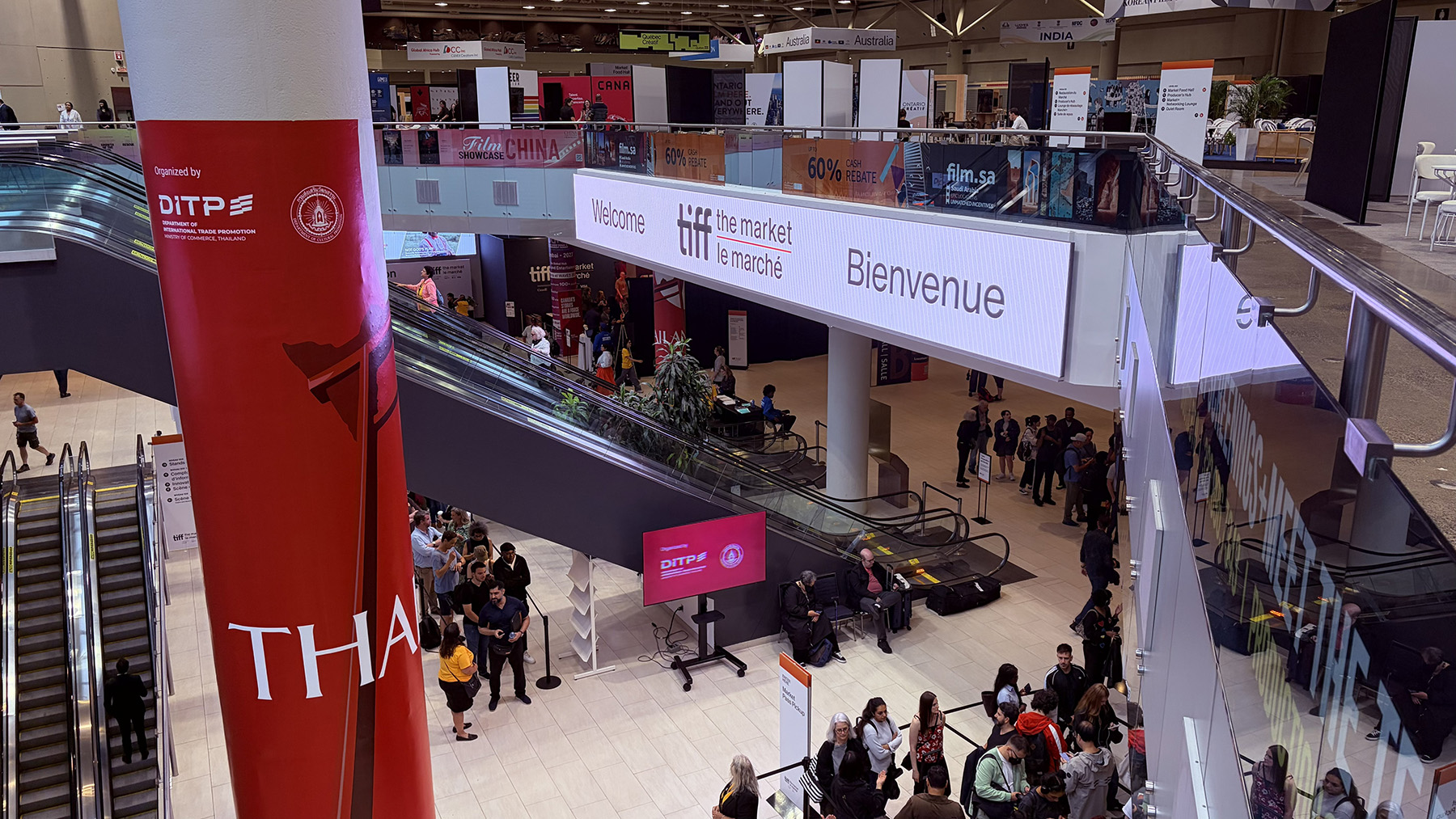
Toronto’s film market showed significant promise in its inaugural edition, while the festival’s premieres, receptions and energetic social circuit remained essential to the business of building relationships.
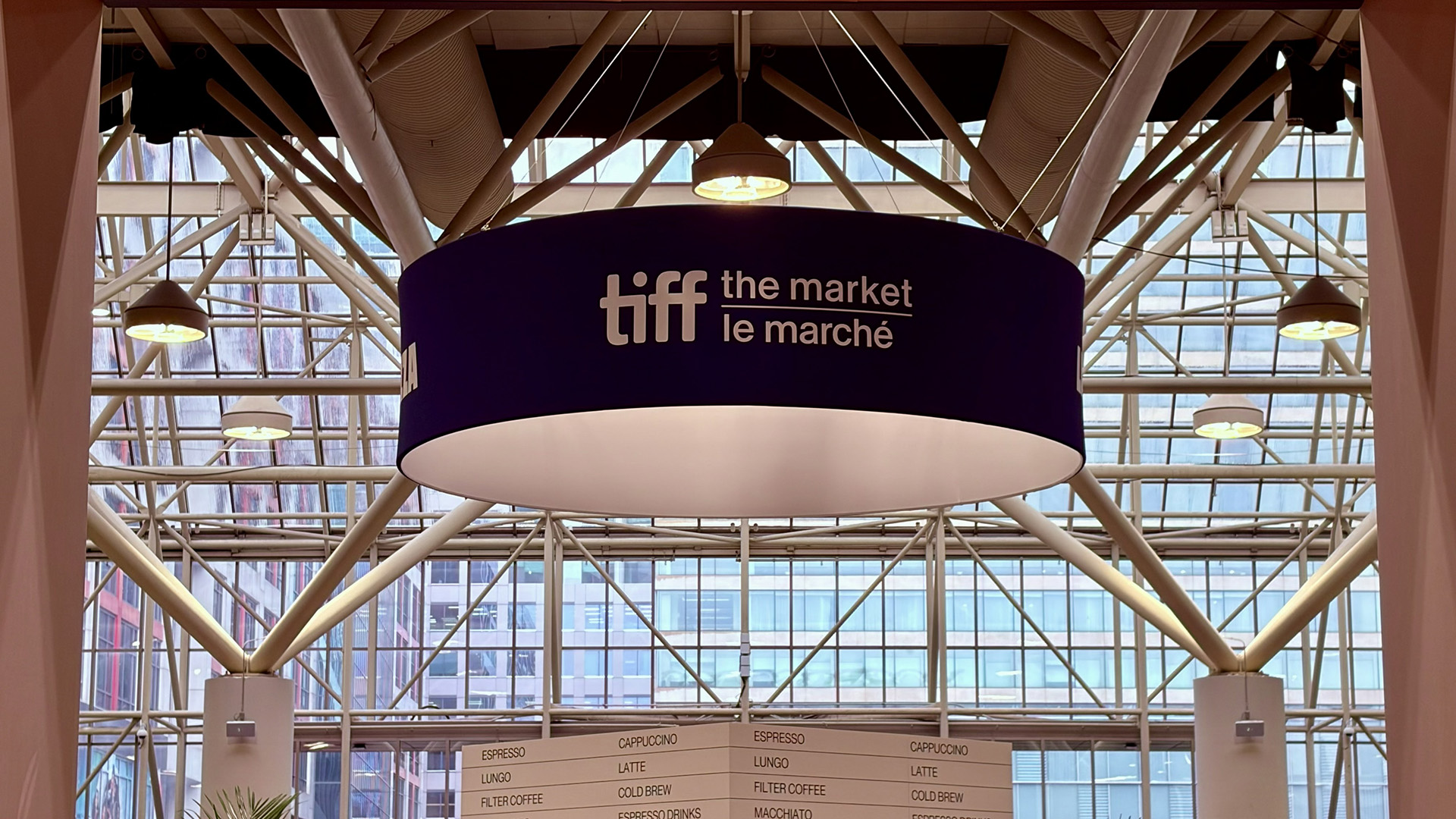
The inaugural edition of TIFF: The Market marked an important step in the evolution of the Toronto International Film Festival, formalizing the substantial business activity that has long surrounded its world premieres, red carpets and industry gatherings.
Producers, filmmakers and sales agents arrived with clear objectives: secure financing and distribution, introduce projects to international partners, expand their professional networks and identify new opportunities for collaboration.
One of the highlights of the market was the creation of the TIFF app to connect with other registered professionals. For Fabian Uribe, program manager at the Whistler Film Festival, the app has been an essential tool helping him navigate his first time coming to TIFF. “I love the TIFF app. It’s easy to connect with and find people that offer things that you need or maybe to find things that you’re looking for,” he comments.One of the app’s most valuable features was access to TIFF’s downloadable lists of delegates, publicists, and rights holders, making it easier to identify key contacts, arrange meetings, and navigate the market strategically.
One of the challenges mentioned by industry participants was the scheduling of the Access Canada Summit-which spotlights Canada’s vibrant content industry-during the market and TIFF’s opening-weekend festival activities. This created a logistical bottleneck during the crucial first few days. Moving Access Canada one or two days later could make the overall schedule significantly easier to navigate, particularly for Canadian delegates.
A Promising First Edition
Compared with Cannes’ Marché du Film, Berlin’s European Film Market and the American Film Market, TIFF: The Market remained relatively intimate in its inaugural year. Not every major sales company maintained a formal presence with a booth on the ground, and the volume of international buyers and sellers was inevitably smaller.
For a first edition, however, that was neither surprising nor necessarily a weakness.The market benefits from its proximity to one of the world’s most influential audience-oriented festivals, where films can generate immediate public reaction, critical momentum and awards-season attention. That combination gives Toronto a character distinct from markets focused almost exclusively on transactions.
As TIFF: The Market grows, it has the potential to attract a broader range of sales agents, distributors, financiers and international decision-makers. The foundation is already in place: TIFF offers major world premieres, top-level talent, influential media coverage and a strong global reputation. The opportunity now is to build an equally robust business infrastructure around those assets. “I’ve had opportunities to meet creators and filmmakers from the rest of Canada, which is great, because in Quebec we don’t really have so many opportunities to meet actors in this Canadian ecosystem. So for me it’s really positive,” says Mylène Augustin, a producer from Montréal attending as part of the Coalition MÉDIA initiative which supports francophone racialized producers.
The central challenge is balancing “market mode” with “festival mode.” Attendees may begin the day in financing and distribution meetings, move to an industry panel or premiere and conclude with several evening receptions, often in different parts of downtown Toronto.
That intensity can be exhausting. It is also a central part of TIFF’s appeal.
Where Business Becomes Social
Much of the festival’s real electricity emerges from Toronto’s after-hours social circuit once the market day ends.
Receptions, dinners and late-night parties create space for more spontaneous and less transactional conversations. A chance encounter can lead to an introduction, a financing discussion, a new client or an unexpected creative partnership.
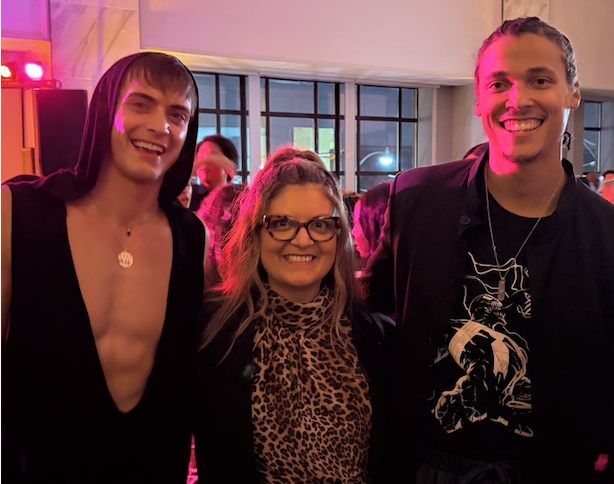
Among the festival’s social highlights was the HELLO! Hollywood Northparty, hosted by HELLO! Canada and NKPR, which brought together actors, producers, publicists and other industry figures in a celebratory setting. We were able to spot there the actors of the hit Crave/HBO show Heated Rivalry:Kaden Connors and Benjamin Roy.
Hello! Hollywood North Party. | Kaden Connors (actor), Patricia Chica (filmmaker) and Benjamin Roy (actor)
The star-studded Road to the Golden Globes reception was another coveted invitation, attracting an international mix of A-List actors, filmmakers in the official selection, studio executives and awards-season insiders.
The annual Young Filmmakers party organized by John Davidson and Katisha Shaw among others offered a more accessible and community-driven counterpoint. Known for its lively atmosphere and impressive gift bags, the event donates its net proceeds to charity while creating a welcoming environment for emerging filmmakers, actors and established professionals to connect the night before TIFF officially starts.
The Electric Panda party, open to filmmakers and reliably packed, also demonstrated the importance of inclusive industry gatherings. Its popularity reflects the demand for events where independent creators can participate in TIFF’s social ecosystem without requiring an exclusive invitation.
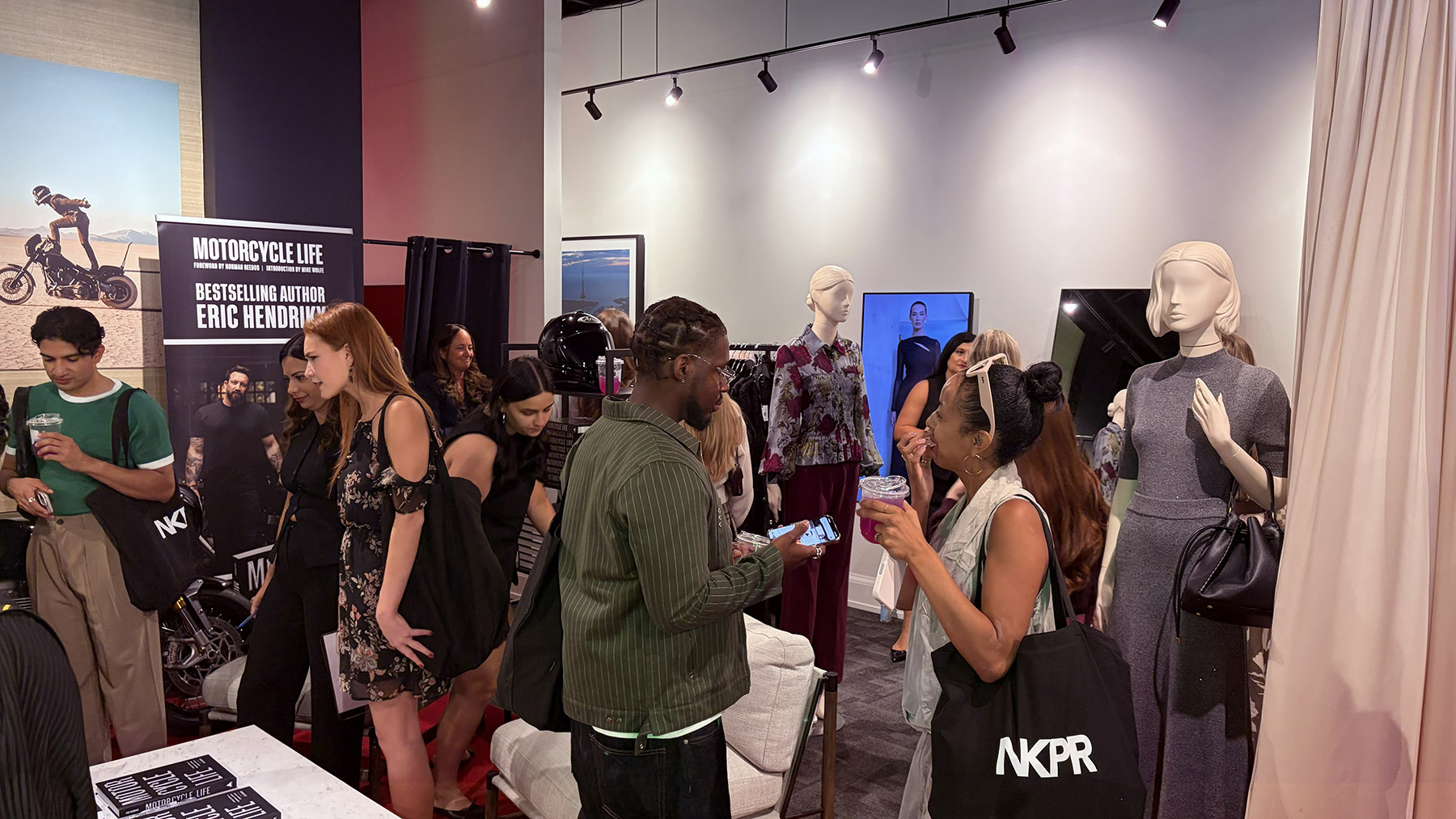
On the sidelines of the festival, the It House hosted by NKPR with People, Shutterstock and Entertainment Weekly, brings together A-list talent and brands such as Melanie Lyne, Ellement, LowKal, and Sorel. Since its 2006 launch, It House has become a fixture of Toronto’s festival circuit, offering media, talent and VIPs a downtown retreat featuring sponsored activations, influencer programming, a celebrity portrait studio, and its signature rescue puppies. “The exposure that you get during TIFF, in the five days that you’re here, is probably more exposure than you get in an entire year,” says NKPR’s president Natasha Koifman.
These gatherings confirmed an industry truth: films may be presented inside theatres and negotiated across meeting tables, but relationships are frequently built in the spaces between them.
The Queer Pavilion
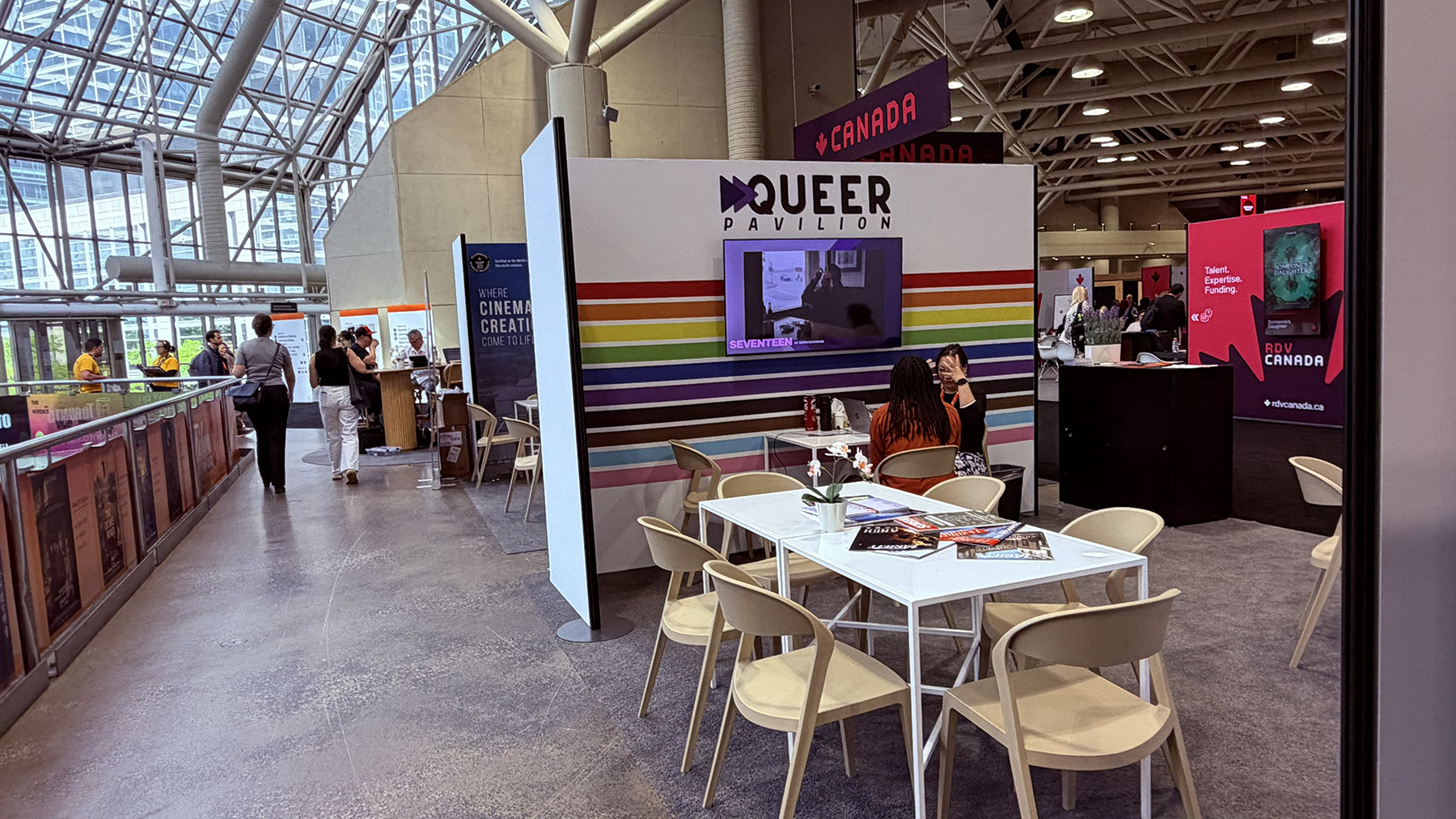
For the first time, a film market has a Pavilion fully dedicated to the Queer community. It was founded by industry insiderKirk Cooper, and turned out to be a pivotal place for LGBTQ+ content and Queer delegates. “The queer pavilion is a safe space for queer content and queer content creators to be able to do business. It’s important to have a place like this because to me, as someone who’s queer and black, representation matters,” explains Cooper.
The Queer Pavilion
A Venue in Search of Warmth
The Metro Toronto Convention Centre provided the scale required for a growing market, but it proved less intimate and inviting than the Hyatt Regency’s previous industry hub on King Street.
The Hyatt’s layout encouraged spontaneous encounters and was conveniently located near many of the restaurants, hotels and event venues along King Street West. By comparison, navigating between the convention centre, screenings, meetings and private receptions involved considerably more walking and travel time.
The MTCC could benefit from additional green spaces and more comfortable, informal meeting areas furnished with couches, lower chairs and accessible tables. Markets are built around conversations, and their physical environments should encourage delegates to sit down, stay longer and connect organically.
Several amenities were nevertheless welcome. The complimentary Lavazza coffee stand provided essential fuel during long market days, while a spring-water station allowed attendees to refill their bottles. These were small but thoughtful additions that made the daily experience more comfortable.
The Question of Value
The market badge’s price remains another consideration.
Even with discounts offered through organizations such as the Canadian Media Producers Association, the Directors Guild of Canada and TIFF’s alumni network, the pass remained expensive relative to the inaugural edition’s size and offerings.
Because many meetings can still take place in near-by hotel lobbies, restaurants and private venues outside the MTCC, the badge must provide a sufficiently compelling level of exclusive access, programming and measurable business value.
A more accessible price point, or additional benefits that cannot be obtained outside the official market, could encourage more independent filmmakers and producers to participate in future editions.
Building a Market for the Future
The industry should resist judging TIFF: The Market solely by the logistical challenges and growing pains of its first year.
TIFF is undertaking something consequential: establishing a significant Canadian marketplace capable of bringing together a curated selection of films, major premieres, international talent, new technologies through their Innovation Hub, and meaningful opportunities for discovery, financing, sales and collaboration.
The market also occupies a potentially valuable position in the international calendar, creating a North American bridge between Berlin’s EFM and Cannes’ Marché du Film earlier in the year and AFM later in the fall.
For Canada, the stakes extend beyond a single festival edition. Supporting TIFF: The Market during its formative years, and providing specific, constructive feedback, will help it grow into a stronger and more internationally competitive platform.
The inaugural edition revealed areas requiring refinement, including scheduling, delegate access, venue ambiance and badge pricing. But it also demonstrated that Toronto already possesses the essential ingredients of a major international marketplace: influential films, global talent, an engaged public and a dynamic social culture where meaningful professional relationships can flourish.
Now comes the work of turning that promise into permanence.
“It’s quite safe to say that TIFF is fun, positive and is able to achieve things,”adds Martin Gooch, a BAFTA-winning director attending with a slate of projects.
Photos and reporting by Patricia Chica, international correspondent & filmmaker.