“I think a good work knows how to accurately represent all human sadness.”
In summer, Nagisa (Yumi Kawai) and Natsuo (Mansaku Takada) meet by the sea, navigating between awkward conversations and shared solitude. In winter, Lee (Shim Eun-kyung), a struggling screenwriter, arrives at a remote inn buried under snow, carrying with her an old camera that belonged to a deceased acquaintance. There, she meets the enigmatic Benzo (Shinichi Tsutsumi).
Inspired by the mangas A View of the Seaside (1967) and Mr. Ben and His Igloo (1968) by Yoshiharu Tsuge, Two Seasons, Two Strangers (旅と日々) interweaves two discrete stories about solitude and ephemeral bonds.
Solitude in Everyday Life
Solitude, a recurring theme in Japanese cinema, embeds itself in Shō Miyake’s new feature film. However, rather than focusing on isolated characters, he uses the concept of meetings in unusual circumstances and undefined relationships: neither lovers, nor friends, nor colleagues… simply strangers who find themselves together and develop a human connection.
The film meticulously captures the bonds that unite beings, as well as the time and atmosphere that permeate these relationships. Moreover, time flows in slow motion, testing the viewer, who finds themselves facing situations that are almost mundane yet incongruous.
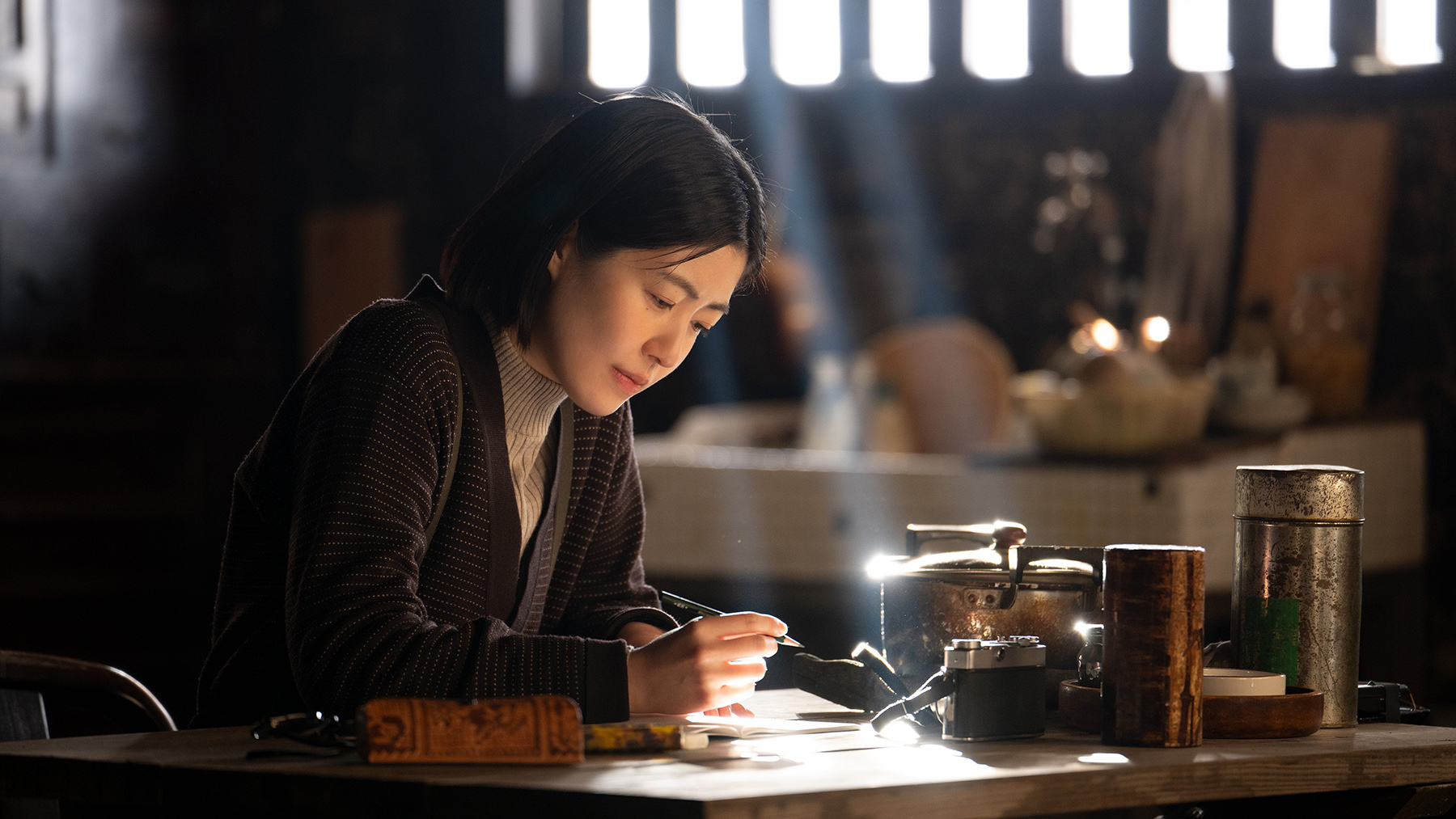
Lee (Shim Eun-kyung) looking for an inn
As in his previous works, director Shō Miyake depicts how hearts heal thanks to the slightest spark. A simple encounter during a trip can, imperceptibly but surely, change a life. This soft and warm vision, which resonates within each of us, delicately envelops the spectator, offering a film of great visual and auditory intensity.
The Film Within the Film
The technique of the film within the film to tell a story is nothing new. We have seen it in numerous movies; Italian cinema is particularly steeped in it. But here, the way it is utilized is fresh. Rather than clearly connecting the life of a director and their work, Shō Miyake passes through themes (solitude and existential melancholy) and links them to the screenwriter of the film within the film.
Furthermore, rather than constantly jumping back and forth between the real and the fictional, Two Seasons, Two Strangers concentrates on the fictional for a long stretch before spending a long period in reality, only later moving into shorter alternating sequences within each reality.
Lee
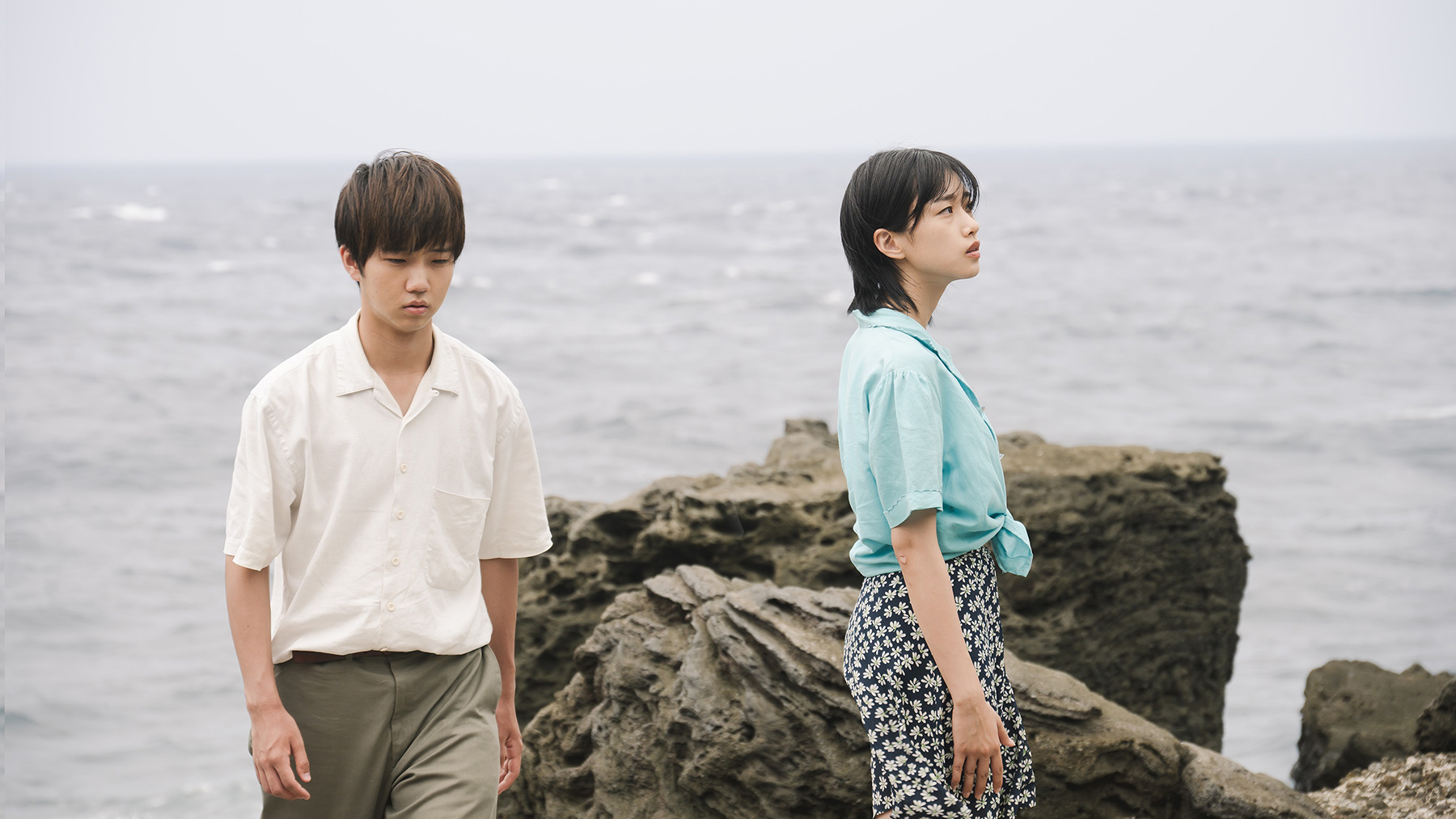
The fictional part is the story of those two people who met on the beach, which is projected onto a screen in a university amphitheater. The film, adapted from Yoshiharu Tsuge’s manga A View of the Seaside and written by Lee (the character at the center of the real world), was being shown as part of a class. After the screening, when a student asks for her opinion on the film, she replies: “I realized that I have no talent.” In the hallway after class, Lee speaks briefly with Professor Uonuma. Seeing her looking dejected, the professor tells her lightly: “You should go on a trip to cheer yourself up.” Shortly after, the news breaks: Professor Uonuma has died suddenly. Lee goes to the professor’s brother to offer her condolences. Shaken by this sudden death, she receives a film camera—a keepsake of the professor—that the brother hands to her almost by force.
Thus, Lee attempts to break her melancholy through travel, while Nagisa travels to a city she once left and meets another melancholic soul there. Two Seasons, Two Strangers strongly associates the idea of travel with healing grief, sadness, and melancholy. Besides, isn’t that what many people do in our real world? Consequently, we can easily identify with one of these four characters. The interplay between reality and the movie adds a layer that offers a completely different way for the spectator to identify. After all, who has never imagined themselves living inside a movie?
A little more…
Oscillating between sea and snow, Two Seasons, Two Strangers becomes a delicate meditation on displacement, human distance, and those fragile moments of grace that briefly bring people together. If we look for a translation closer to the original title, it could be translated as “Travels and Days,” which links the notion of the monotonous with displacement, all within a melancholic tone.
Natsuo (Mansaku Takada) and Nagisa (Yumi Kawai)
It is perhaps this melancholic inclination that brings the film closest to the original mangas from which it draws inspiration. The actors’ performances also lean this way, as it is clear that the screenwriter is hiding a deep sadness. As for Nagisa and Natsuo, they are united by the profound melancholy that inhabits them.
The result is a beautiful, slow, and bittersweet film.