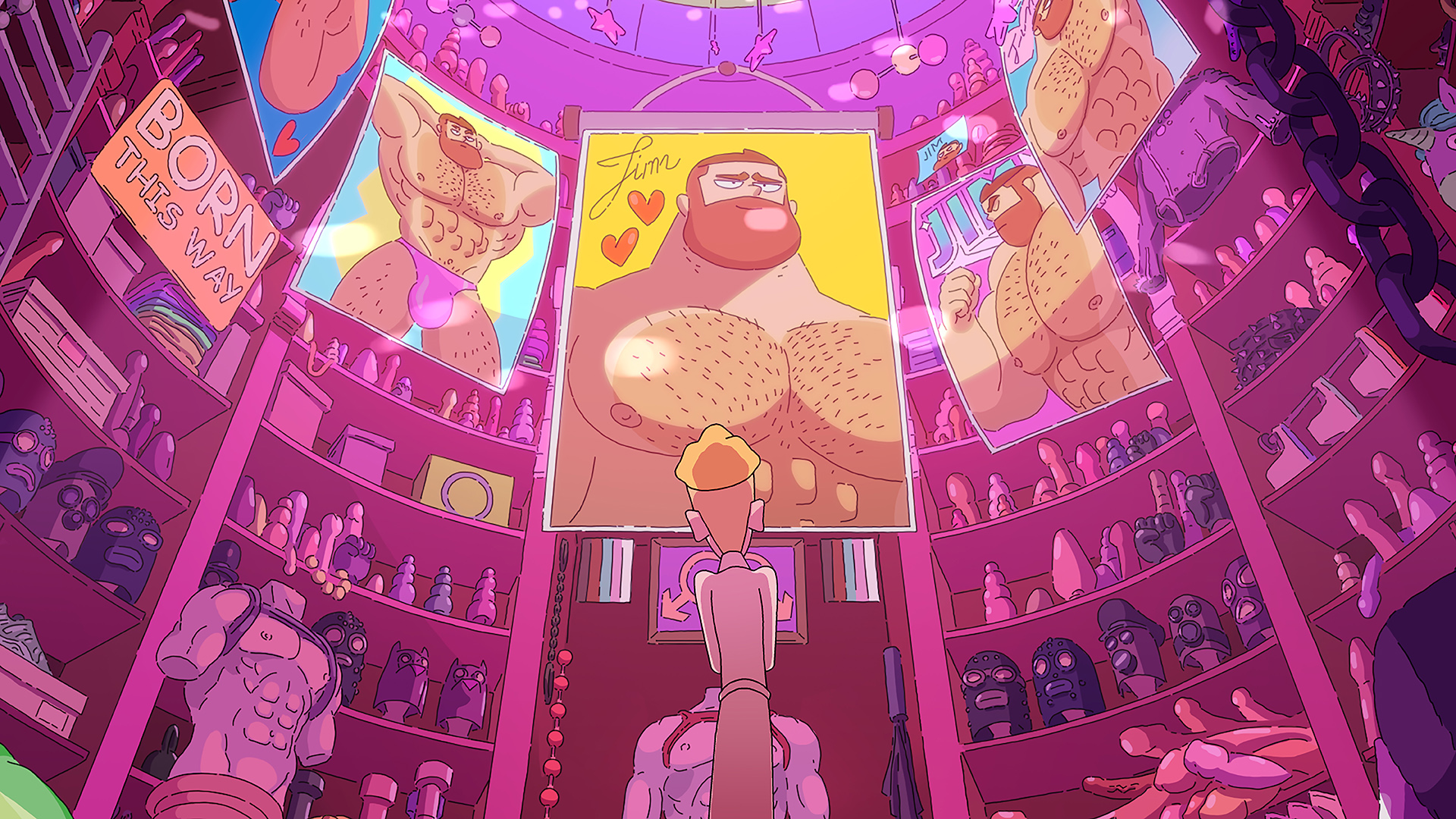
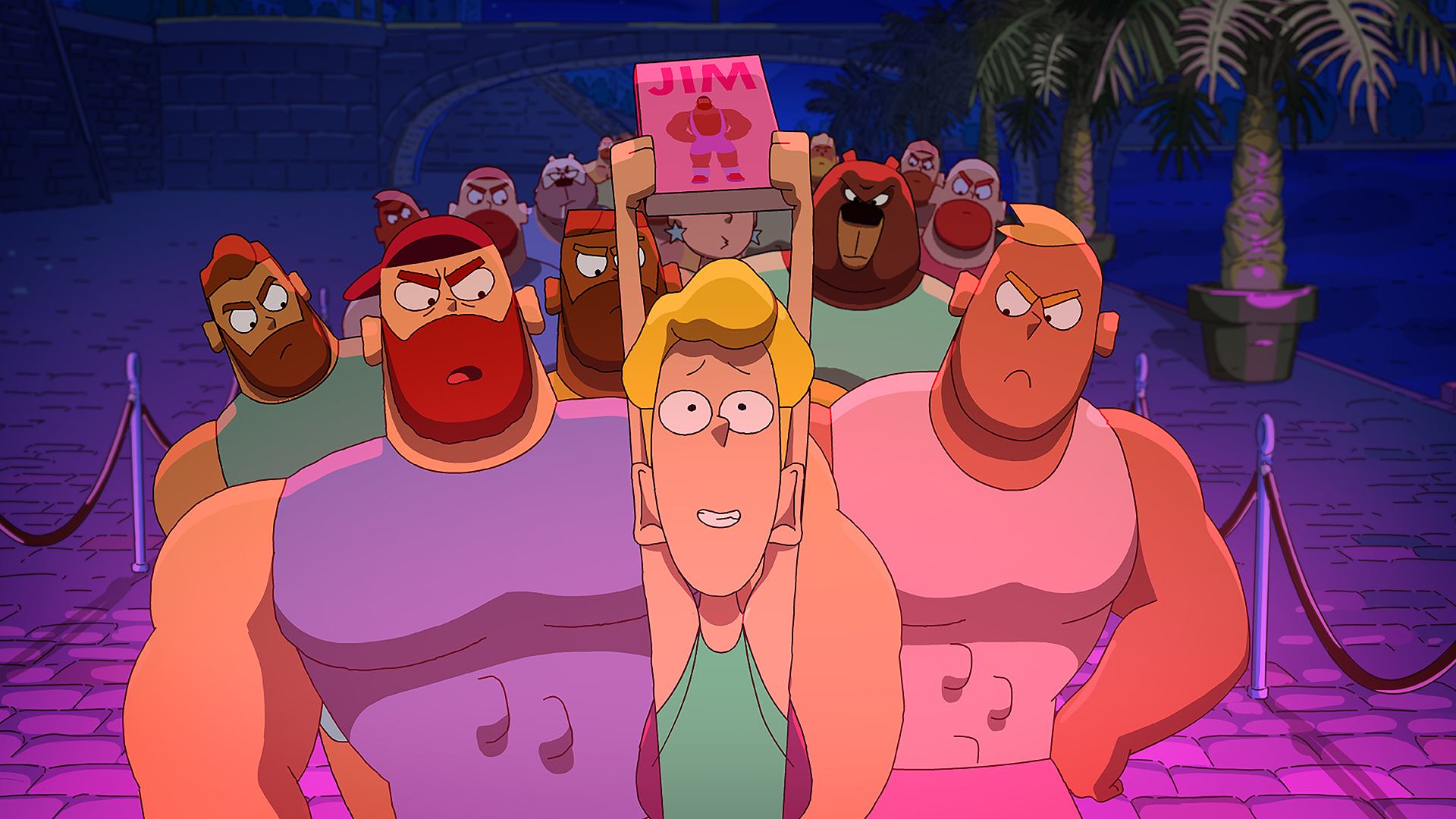
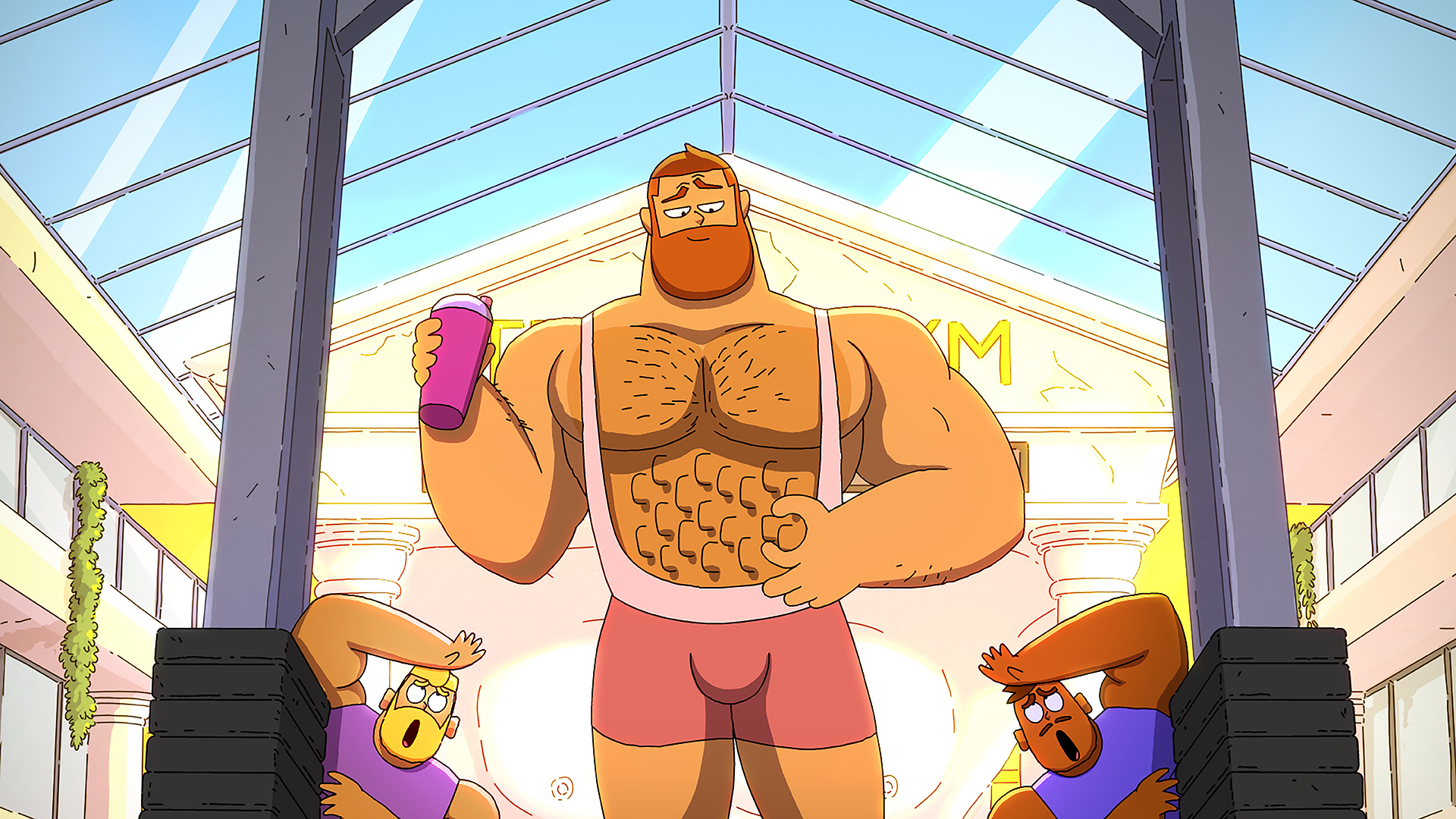
Jim Queen is a beautiful, wildly insane, deeply creative project that breaks rules and stereotypes. A true little UFO at the Cannes Film Festival, it successfully found its audience: the theater was laughing hysterically from the opening credits to the very end of the screening. As an animated feature aimed at adults, it doesn’t pull any punches; its themes push boundaries, driven above all by a proud and unapologetic desire to make people laugh.
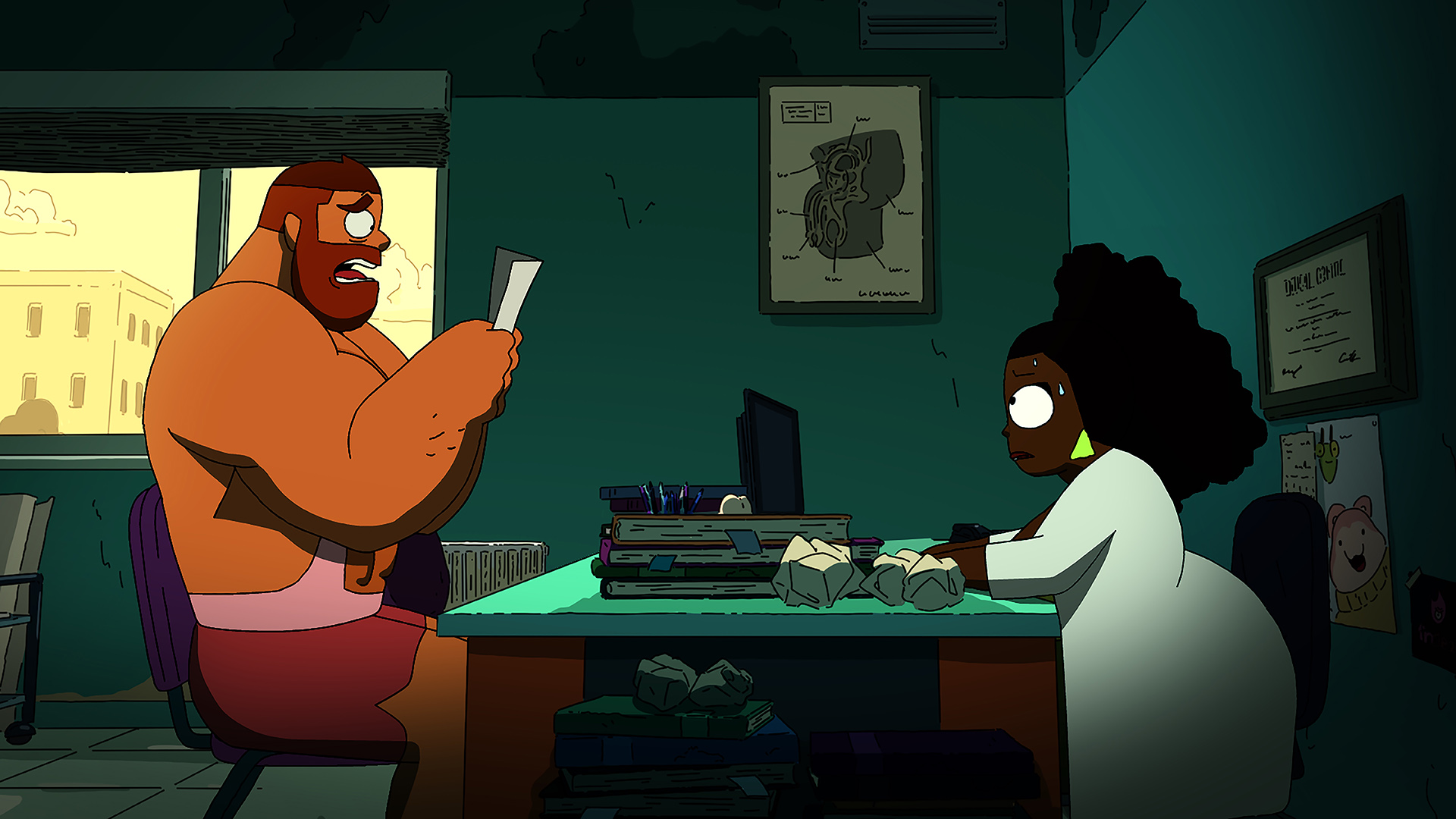
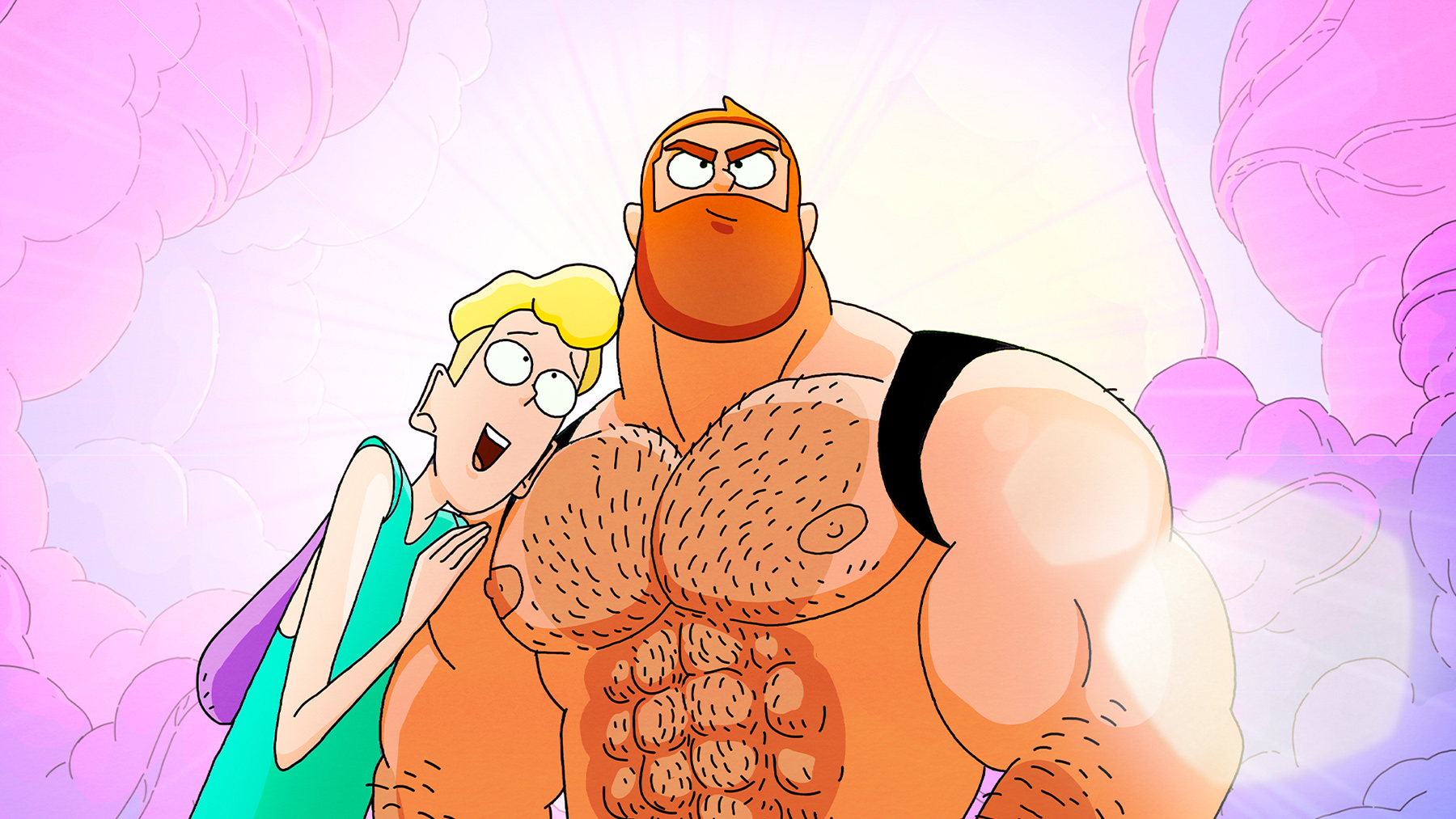
Jim Parfait, a gay icon of the Parisian scene, sees his world crumble when he contracts “heterosis,” a virus that turns homosexuals into heterosexuals. Everyone abandons him except Lucien, one of his young followers, who is shy and discreet. Together, they travel to the furthest corners of the capital in search of a mysterious cure capable of healing Jim.
When Audacity Meets Precision
The storyline of Jim Queen should already give you a glimpse of the work’s comedic potential. But the film goes even further, taking us from surprise to surprise while maintaining its sharp sense of humor. It isn’t afraid to criticize and point fingers at its own community, all while delivering powerful declarations of love to it.
The film is not only funny and well-written; it also possesses a genuine visual strength thanks to its animation. The colors, textures, and movements are particularly successful. Even though the film talks about sex and shows it openly, it never becomes obscene or inappropriate.
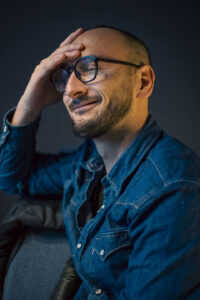
I had the chance to meet and ask a few questions to the film’s crew: Marco Nguyen, one of the two directors, and Simon Balteaux, one of the four screenwriters. As the screening approached and the synopsis was announced, I kept wondering: how do they come up with such ideas? So, I wanted to know more about their creative process, how ideas are born, how far they can go, how to know if they are going too far, which subjects to tackle, and the choice of voice actors.
Much like their film, I was warmly welcomed. The conversation was fluid and rich, and they answered my questions with great generosity. Like their work, they did not hesitate to go far and give a tremendous amount.
From our sick minds. It comes from a shared desire to talk about ourselves, our lives, our environment—the gay community that we adore, and that we wanted to show in all its beauty, but also with its flaws, as you can see.
We wanted to be very precise about our experiences and ask ourselves what would happen if, one day, all of that was taken away from us. That is how the concept was born. It is a fairly classic writing technique: when you want to show that something is important, you remove it. What happens if there is no longer a gay community? If everything disappeared?
And then, obviously, it was also a snub to everything we have heard for years—that we were sick, that being gay was the sickness. There is also a direct link to the HIV/AIDS epidemic. We grew up in the 80s; we were traumatized in our sexuality and our flesh by that, like many people.
Gradually, by mixing all of that together, you arrive at a crazy idea like heterosis.
At the beginning, were you afraid that you wouldn’t be understood?
At first, we weren’t afraid of it; we laughed about it. But then, we told ourselves it was still a totally insane idea. Throughout the whole process, until the very last moment, we didn’t ask ourselves too many questions.
But it was especially a few weeks ago, when Thierry Frémaux pitched the film and you realize it’s selected at Cannes, that’s when we actually got our answer. And then you say to yourself, that’s it, we’ve been understood.
During eight years of development, right up to the end, we didn’t know. We really wondered if we were going to face violent criticism. We talked about it among ourselves, saying, “OK, the movie is made, now we have to own it.”
We were deeply convinced that it had to be made, we loved it profoundly, but the real fear was knowing whether it would be understood.
There are two of you directing and four writing. How does it work with ideas and disagreements?
We had a very fluid and pleasant writers’ room. There were two gay guys and two straight guys; Nicolas Athané et Brice Chevillart, who have also been working in animation for a long time, brought a different perspective.
Sometimes, we were too caught up in a language that was “for us, by us.” They helped make the film more universal. Through the character of Lucien in particular, they put themselves in the shoes of someone discovering the community.
We didn’t have any restrictions on what we wrote. We went really far, with a single common goal, which was to make people laugh, not to shock. That’s what I often say: you can easily shock by saying just anything, and we wrote some very shocking things, but you also have to try, to be bold, without crossing the line that would harm the project.
Writing with four people is rare, and it’s rare that the writing goes so well, actually. So we did hours and hours and hours of workshops, discussions, etc., but it also allows us to have four different minds, and what’s more, with completely different lives.
Two straight guys who, during that period, were having children and living their pure “heterosed” life, and the two of us, who at that time—a bit less now—were having the time of our lives in the Parisian gay nightlife. There was a genuine curiosity about each other’s lives, and that fed the project enormously.
The goal was primarily to make people laugh, not to shock or deliver a message?
In our film, there was never really a political intention; we just wanted to talk about our lives, about what we were experiencing, and in fact, the current context means that just talking about it makes it political. It is more the current environment that brought all this political connotation. I wouldn’t say there was no political intention, but there was no militant intention, retorts Simon Balteaux.
We didn’t want to give lectures or carry a specific message. On the other hand, we knew that talking about sexuality, drugs, or kinks was inevitably going to take on a political dimension.
Today, with the reactions at Cannes, the film is perceived as more political than what we initially imagined. It wasn’t necessarily the intention, but if it opens up discussions, all the better.
The heart of the project remains, above all, laughter, satire, and self-deprecation. And in a way, making people laugh can already be a form of engagement.
We also feel that the film is coming at the right time. Earlier or later, it probably wouldn’t have been received the same way. With LGBT rights being increasingly challenged, it gives a particular resonance to the film and its themes.
Finally, last question regarding the voice casting: did you have specific celebrities in mind from the start, or did the casting come later?
We had some in mind at the beginning, but in the end, they weren’t necessarily the actors we got. The characters evolved throughout the writing process, but also thanks to their visual design, which influenced certain choices.
We wanted a very fast-paced comedy with a real sense of timing. That’s why we turned to profiles like Alex Ramirez or Shirley Souagnon, who come from stand-up, with a real mastery of rhythm and comedic efficiency.
Having a queer cast was also very important to us, so that the actors could bring their own lived experiences to the characters. There is always this debate: does an actor absolutely have to share the identity of the role? We know that actors can play anything, but we thought that here, it would bring even more sincerity and embodiment.
And we don’t regret this choice at all. For example, François Sagat brings so much, with a lot of self-deprecation, but also a real subtlety in his acting. Each actor enriched their character, sometimes beyond what we had imagined.
Some roles also had specific constraints, notably the singing characters, which inevitably played a part in the casting. And sometimes, choices were linked to personal encounters, like Harald Marlot, whom Marco already knew from the Parisian nightlife scene.
All of this contributed to making the film more embodied, more alive, and above all, more sincere.
And regarding Philippe Katerine, how did the idea come about to have him play a prostate?
That was the producer’s idea. A stroke of absolute genius. We didn’t think he would accept, and in the end, he said yes… precisely because it was a prostate.
When we found out, we thought it was surreal. And I must admit, when I saw that Philippe Katerine was going to play a prostate in my first feature film, I thought to myself, “That’s it, I can die happy.” I am a huge fan of Philippe Katerine.
It also shows that the producers had great instincts on this project, whether it was for the casting or the relationship they built for the writing quartet—that came from them too. They really had a great feel for a lot of things.
Exerpt of the interview
Translation by François Grondin with the help of Gemini.
Technical Sheet
Original Title
Jim Queen
Duration
85 minutes
Year
2025
Country
France
Director
Marco Nguyen et Nicolas Athané
Screenplay
Simon Balteaux, Marco Nguyen, Nicolas Athané and Brice Chevillard