“Resentment is like drinking poison, and waiting for the other person to die.”
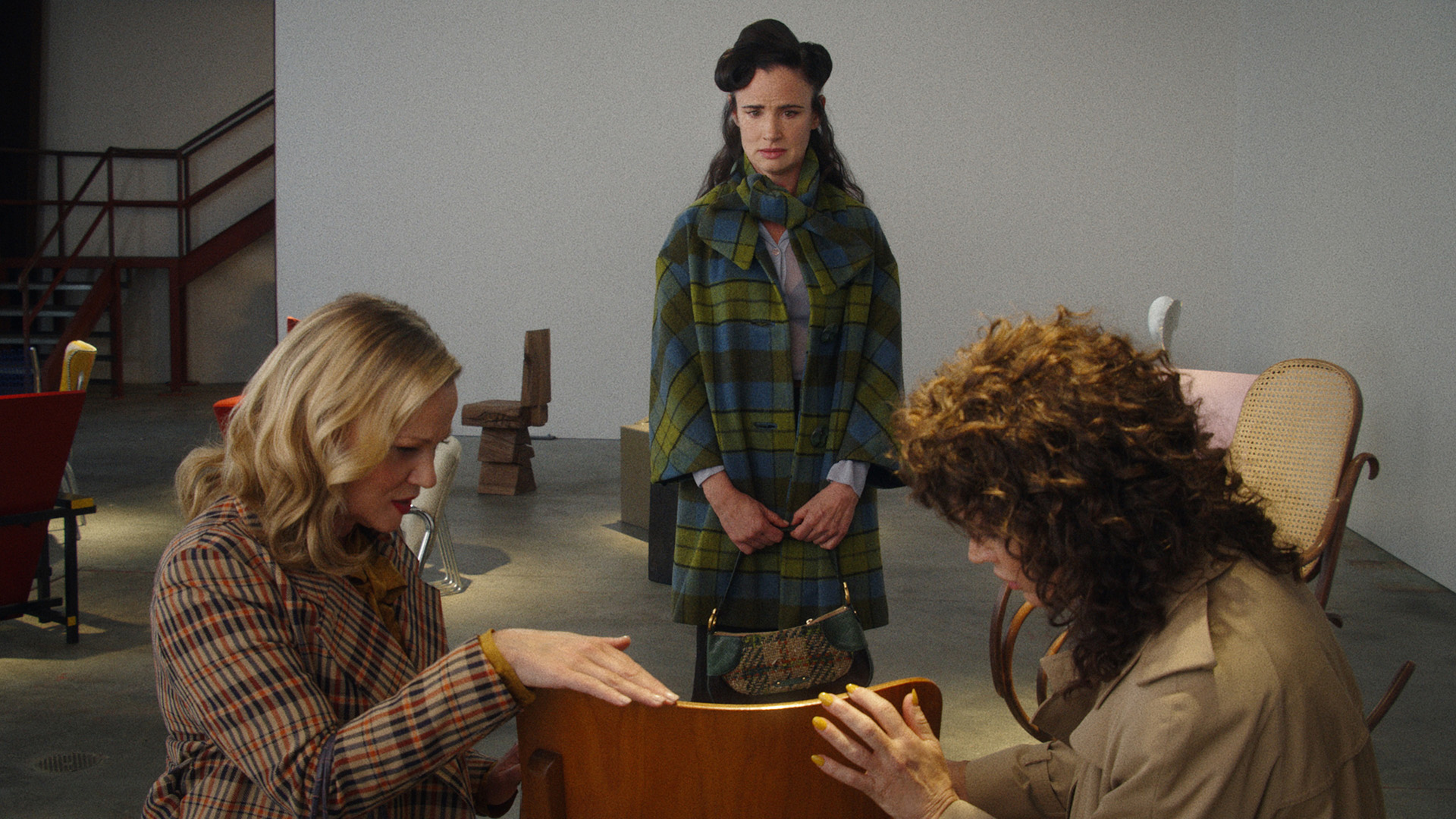
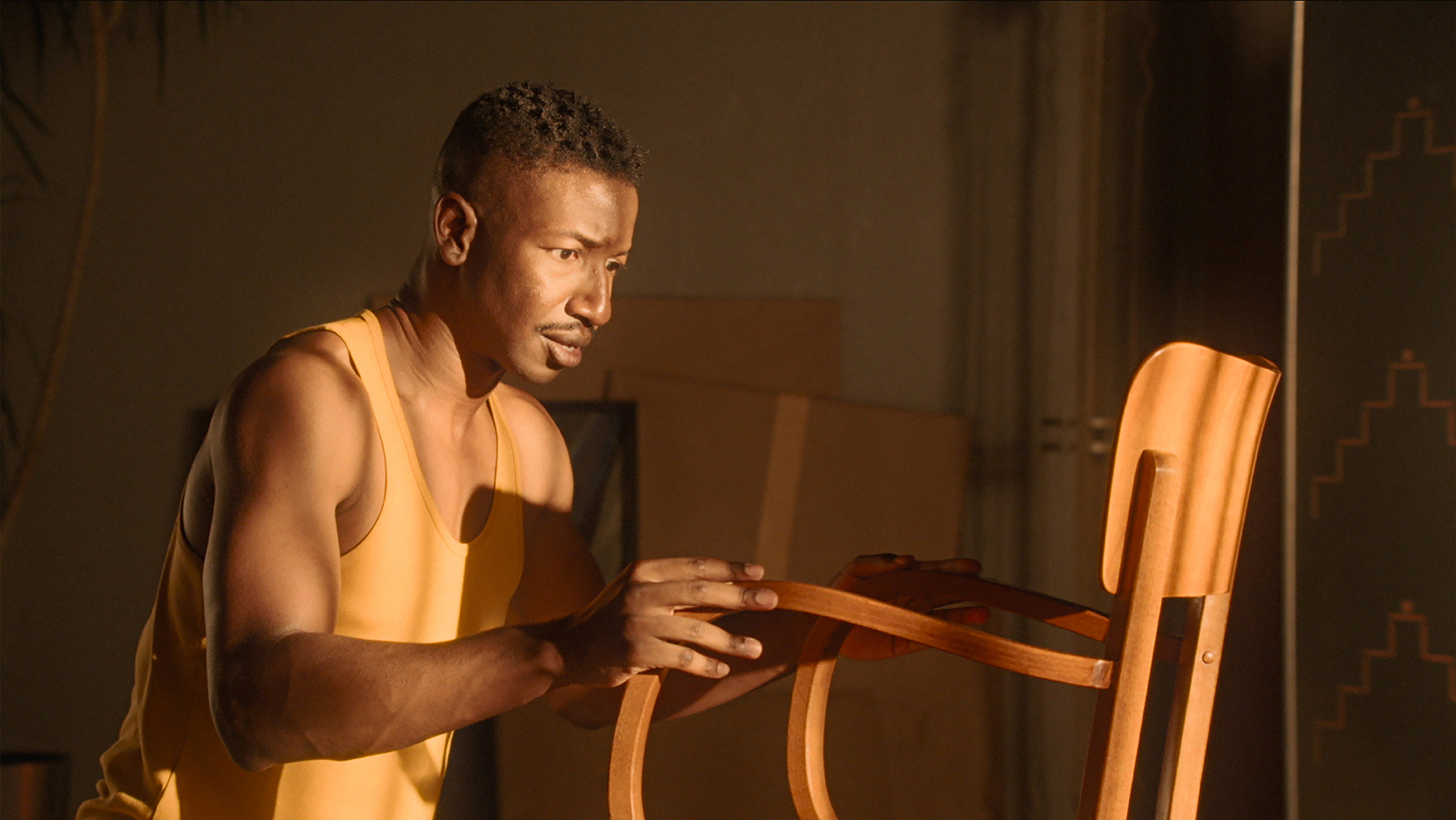
Upon seeing a gorgeous chair in a showroom, Camille (Juliette Lewis) realizes that she truly envies the life of this perfect piece of furniture. If only she could be someone’s favorite thing! When she and the chair swap bodies, Camille discovers that she is better liked as an inanimate object than she was as a person: her mother (Betty Buckley) finds her to be a better listener, and her best friends (Samantha Mathis and Robin Tunney) enjoy a newfound rapport, without the slightest friction. Having become a chair, Camille is unable to speak or move and finds herself in the hands of Olivier (Mamoudou Athie), a minimalist bachelor who gradually develops a romantic obsession for his elegant new acquisition.
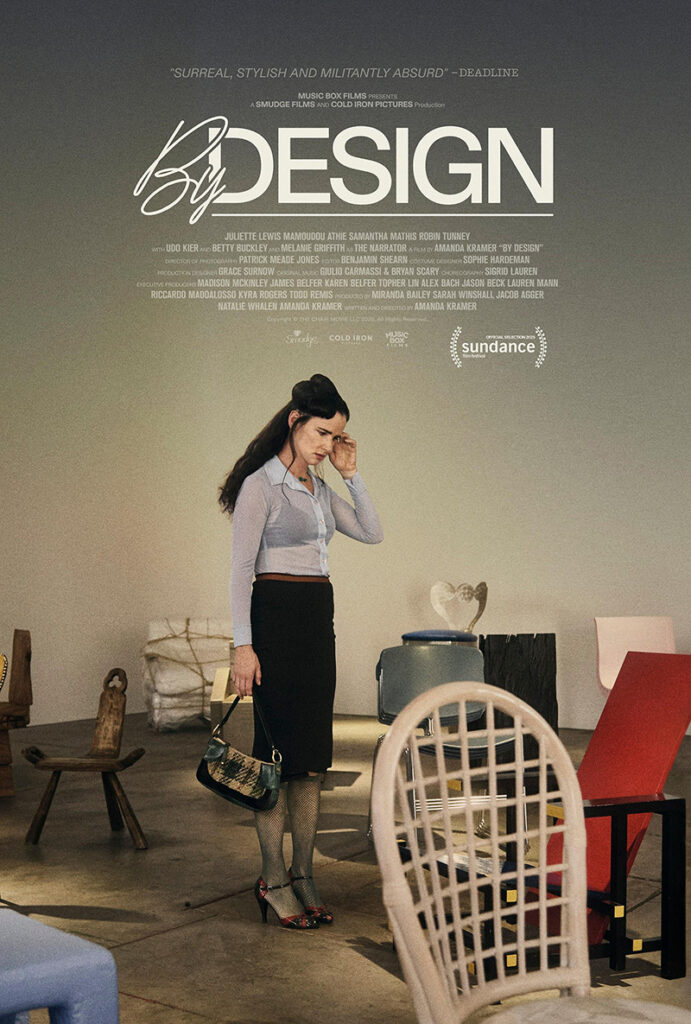
An absurdist comedy on the theme of body swapping, By Design is a bold and innovative work by the singular filmmaker Amanda Kramer.
A Narrated Fable
Narrated by Melanie Griffith, this modern fable celebrates the complexity of female interiority with deadpan humor, surrealist touches, and interpretive dance numbers. The result is an astonishing, slow, and striking film.
Griffith narrates the story like one reads a book to a child. In a simple, slightly expressive tone, she explains what Camille is experiencing and feeling. Meanwhile, the fable unfolds on screen like a stage play enhanced by dance.
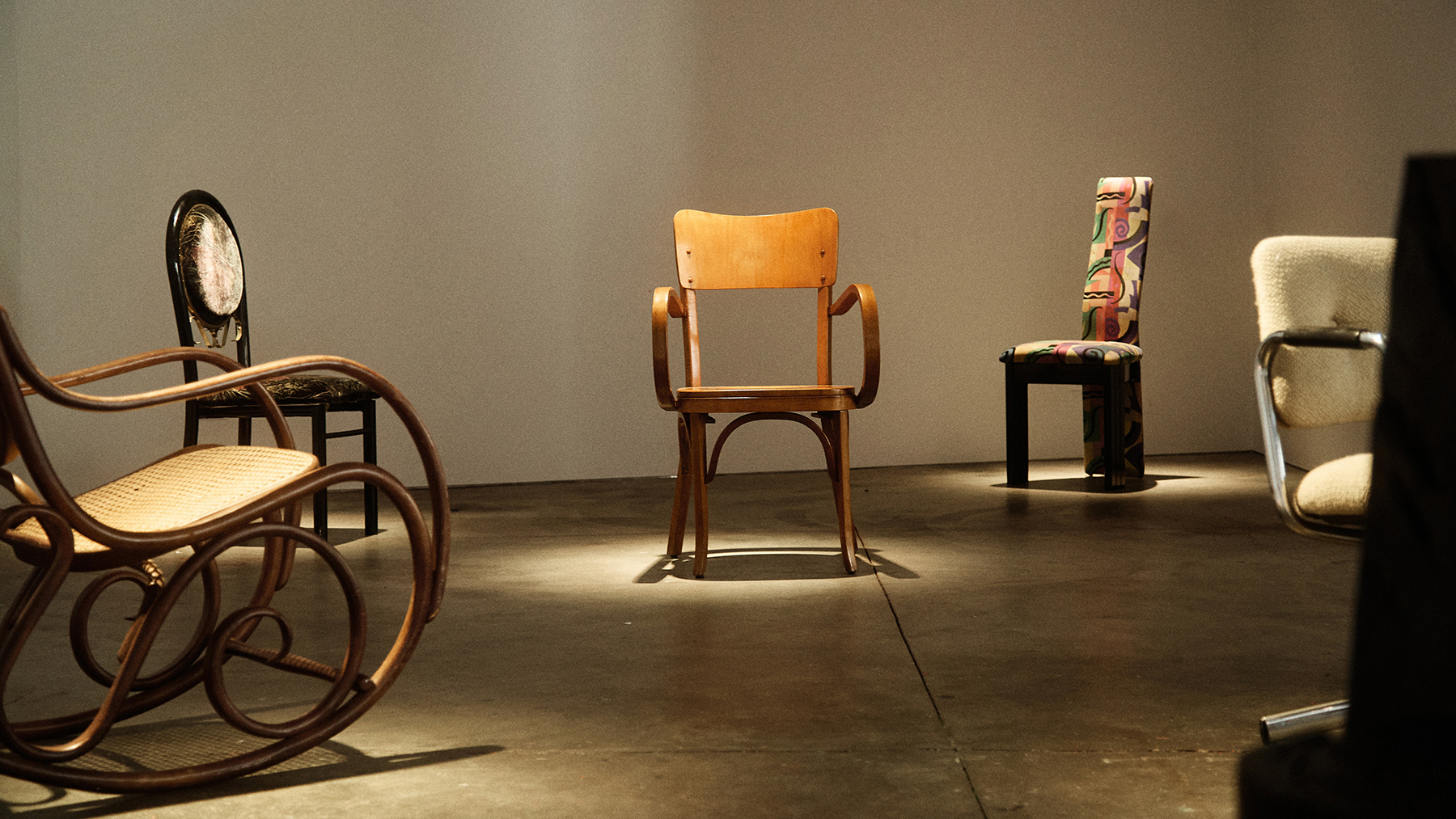
The Chair | Courtesy of Music Box Films
The performances by Juliette Lewis and Mamoudou Athie are masterful. The reactions and expressions they offer tell everything that words cannot show. While words alone might be enough to offer a solid work, the images on their own would also be sufficient. But the combination of the two gives another dimension to this film of an almost non-existent genre.
I would describe this feature film as an experimental yet accessible work. Perhaps not for everyone, but even someone accustomed to Hollywood cinema can appreciate it if they have even the slightest open mind.
A Holistic Approach
By Design is a work open to interpretation, and aims more to produce emotions than it attempts to create a directed story. It is almost a tribute to Art with a capital “A.”
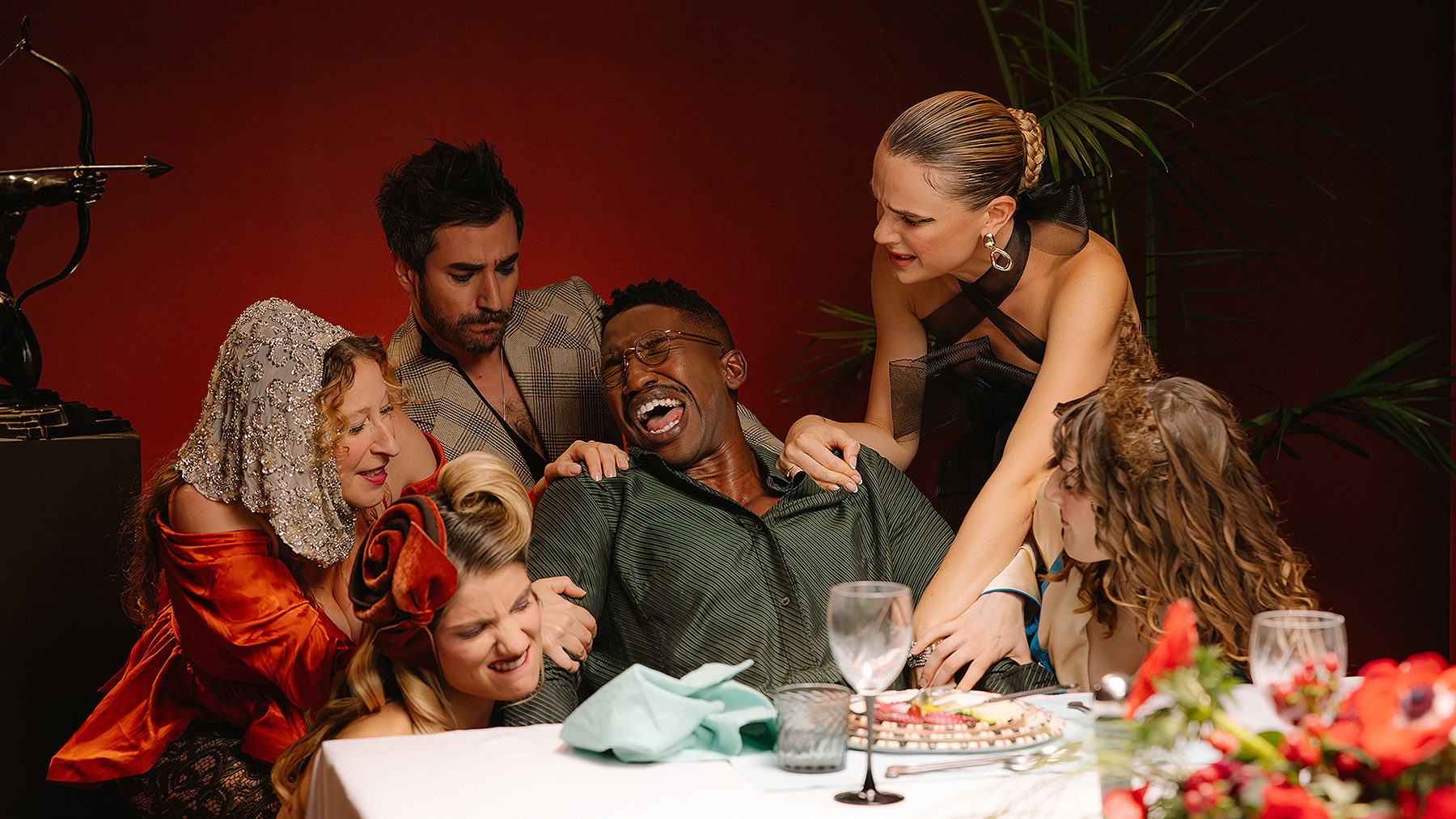
Sophie von Haselberg, Bridey Elliott, Cristo Montt, Mamoudou Athie, Madison McKinley, and Greer Cohen | Courtesy of Music Box Films
This film adopts a holistic approach to the arts: painting, sculpture, dance, theater, fashion, digital media—it’s all there.
“It is essential that cinema does not lose its artistic language, and that the fine arts do not stubbornly oppose entertainment. Each project that blurs genre boundaries and disrupts forms brings me closer to the very essence of the living that I revere in dance, theater, performance, and opera, and allows me to breathe into cinema that living dimension I cherish so much.”
We can see the importance the director gives to arts of all kinds, as she integrates a number of them into this work. There is the obviousness of cinema, but we clearly find theatrical interpretations, manufacturing arts such as carpentry (a form of sculpture), or even dance.
Moreover, the dance sequences are among the highlights of the film. I particularly love the sequence where (one assumes) the chairs take on human forms to dance around Camille.
A little more…
There are many films where women swap bodies—with rich men, younger women, “sexier” women—but none where they swap their form with something inanimate, a stationary object. By going all in, the director gives her film a striking singularity that could allow the film to endure over time.
Mamoudou Athie | Courtesy of Music Box Films
Cinema is considered one of the Arts. Unfortunately, what comes out of the United States is often limited to Hollywood and its flavorless mega-productions, and above all, lacking originality. But a film like By Design brings hope. The hope that something new can come from this country.
The director proves once again that cinema is an art, and that it is still possible to surprise and innovate without resorting to digital effects or astronomical expenses.
A film to see for anyone who wants something that will change their cinematic routine.